
Brazilian pine
Araucaria angustifolia (Bertol.) Kuntze
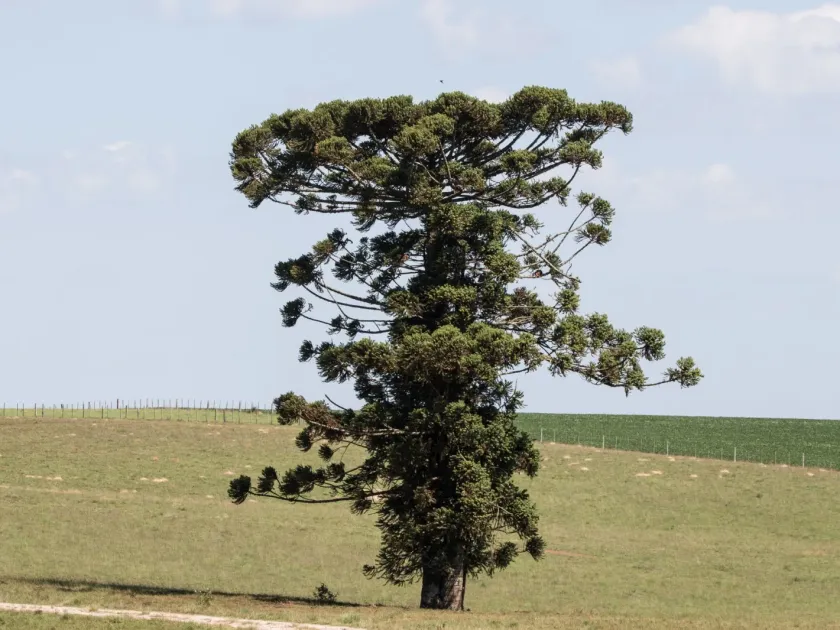
Description
Sowing dates
Propagation of the Brazilian pine is primarily achieved through seeds. Because the seeds are recalcitrant, they must be planted immediately after harvest in the autumn to maintain viability.
The ideal germination substrate should provide excellent aeration and drainage to prevent the seeds from rotting before they sprout.
Industrial forestry operations often utilize containerized nursery systems, which protect the taproot during the critical early development phase of the seedlings.
Seedlings require partial shade during their first two years to protect them from intense solar radiation and dehydration in exposed field conditions.
Outplanting is best conducted at the onset of the rainy season, ensuring the young trees have sufficient moisture to establish their root systems before the drier months.
Growing requirements
Araucaria angustifolia is a member of the Araucariaceae family and is native to high-altitude subtropical regions, preferring deep, fertile, and well-drained soils.
While mature trees can tolerate light frosts, the species requires a climate with high atmospheric humidity and is generally unsuitable for regions with harsh, prolonged winters.
The tree thrives in acidic to neutral soil environments, which support its rapid uptake of nutrients and overall structural development.
Light intensity is a critical factor; although the trees exhibit shade tolerance as juveniles, they require full sunlight to reach their full growth potential as they mature.
Stable, consistent moisture levels throughout the growing season are essential, as the species lacks strong drought-tolerance mechanisms during its development years.
Yield
The agricultural value of this tree is derived from its high-quality timber and its large, edible seeds, commonly referred to as pinhão, which are commercially harvested.
Trees typically reach reproductive maturity and begin producing cones between the ages of 12 and 15 years, depending on environmental factors and plantation management.
The wood is highly valued in the furniture and construction sectors for its straight grain, uniform texture, and lack of resin canals, simplifying mechanical processing.
In managed plantation settings, growth rates are significantly improved, providing a consistent supply of biomass for sustainable wood production.
Seeds are a vital nutritional resource, rich in complex carbohydrates and oils, making them a staple in local food systems and markets within its native range.
Main diseases and pests
Small mammals and rodents are significant threats in the early stages of establishment, often causing mechanical damage by gnawing on the bark and roots of young trees.
Root rot pathogens are a major concern in poorly drained soils, where water saturation encourages the growth of harmful fungi that can devastate young plantations.
Insect pests, such as aphids and spider mites, can cause severe stress to the foliage, resulting in stunted growth and increased susceptibility to secondary infections.
Due to historical over-harvesting, the species is classified as endangered in the wild, necessitating strict conservation practices alongside sustainable plantation forestry.
Environmental stress, such as extreme heat waves or sudden cold spells, can weaken the canopy and make trees more prone to opportunistic pests and fungal diseases.
Harvesting
Harvesting involves the collection of female cones, which naturally disintegrate once the seeds reach physiological maturity and are ready for dispersal.
Workers must exercise caution due to the sharp, rigid leaves of the tree, which can cause significant injury if handled without proper protective equipment during the harvest.
Post-harvest processing requires quick cleaning and sorting of the seeds, as they quickly lose their moisture content and viability if exposed to air for too long.
Mechanical harvesting techniques, such as limb-shaking devices, are increasingly used in larger plantations to maximize yield and reduce the labor-intensive nature of the process.
Harvesting calendars are established based on regional climate patterns to ensure that the collection coincides with the peak ripeness of the seeds before they fall to the ground.