
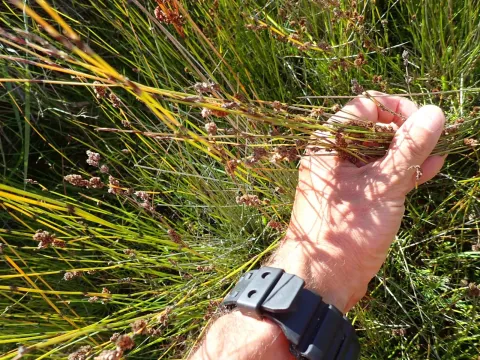
Apodasmia
Apodasmia B. G. Briggs & L. A. S. Johnson
Propagation of Apodasmia is primarily achieved through the division of mature rhizomes during the active spring growth phase.
What the section contains

Apodasmia
Seed germination requires careful temperature control, ideally keeping the substrate between 18 and 22 degrees Celsius throughout the process.
Seeds should be sown in a well-draining, nutrient-poor substrate to prevent fungal infections and encourage strong root development.
Establishing young plants in their permanent location is best done after the risk of frost has passed, ensuring they are adequately watered initially.
It is crucial to handle the root system with extreme care during transplantation, as Apodasmia is sensitive to root disturbance.
Apodasmia belongs to the Restionaceae family, a group of plants often referred to as restiads, which are native to the southern hemisphere.
This plant thrives in full sun exposure, which is essential for maintaining the structural integrity and the distinct blue-green color of its stems.
The ideal soil for Apodasmia is sandy, rocky, and well-draining, as it has adapted to survive in environments with poor nutrient availability.
It displays remarkable tolerance to wind and salt spray, making it a perfect candidate for coastal landscaping and exposed garden sites.
While adapted to various conditions, the plant requires consistent but moderate moisture, avoiding waterlogged soils that could induce root rot.
Apodasmia is generally robust, but it can be susceptible to fungal diseases if planted in heavy soils with poor drainage capacity.
Root rot is the most common threat, often caused by overwatering or using a heavy, non-aerated potting medium during the initial growth stages.
Pests are rarely a major issue for this species, though aphids may occasionally congregate on fresh growth during periods of drought stress.
Competition from aggressive weeds can stunt the growth of young Apodasmia plants, necessitating manual weeding in the early stages of establishment.
Proper airflow is essential to prevent the accumulation of pathogens, so planting density should be managed to ensure good ventilation around the foliage.
In a decorative context, harvesting involves removing dead or discolored culms to maintain the plant's aesthetic appeal and health.
The best time for maintenance pruning is late winter or early spring, just before the emergence of new growth from the base.
Stems harvested for floral arrangements should be cut at the base, ensuring that the plant remains strong and capable of regrowing.
Dried stems of Apodasmia possess a unique architectural beauty, often used in minimalist arrangements or structural design pieces.
Regular maintenance ensures that the plant does not become overcrowded, which preserves the overall vigor and longevity of the specimen.