
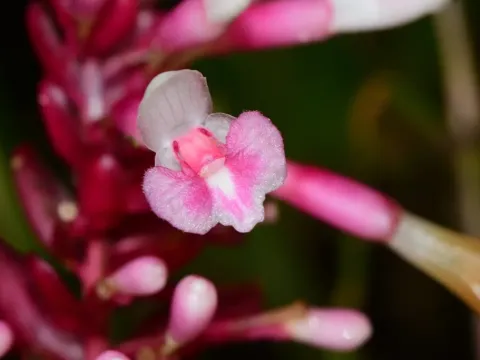
Renealmia
Renealmia
Renealmia is a genus of perennial rhizomatous herbs belonging to the Zingiberaceae family. These plants are native to the tropical regions of Central and South America as well as Africa, primarily inhabiting shaded areas in rainforests.
What the section contains


Renealmia
To thrive, Renealmia requires specific environmental conditions including high humidity and warm temperatures. It is highly intolerant of frost, and even minor temperature drops can significantly damage its vegetative organs.
The ideal soil for this crop is loose, rich in organic matter, and well-drained. Proper aeration of the root system is essential for growth, as compacted soils often lead to restricted development and physiological disorders.
Regarding light, Renealmia prefers partial shade. Excessive sunlight often leads to leaf scorch and dehydration. In agricultural settings, shade nets or agro-forestry systems are frequently employed to maintain the required light intensity.
Irrigation management is crucial; the soil should remain consistently moist but never waterlogged. Nitrogen-rich fertilizers applied during the peak growing season help in maintaining the rapid development of its foliage.
The most significant threats to Renealmia are fungal diseases, particularly root rots triggered by poor drainage or excessive soil moisture. These pathogens can compromise the entire root system if not addressed early.
Pests such as spider mites and scale insects are common in confined or protected environments. They cause damage by feeding on cell sap, leading to chlorosis and potential leaf drop in severely infested plants.
Leaf spot diseases, often caused by Colletotrichum species, can impair the aesthetic and medicinal quality of the foliage. Integrating fungicides into the management program is often necessary under high-humidity conditions.
Root-knot nematodes can severely inhibit the growth of the plants, particularly in sandy soil types. Utilizing disease-free rhizomes and soil solarization methods are effective prevention strategies.
Maintaining good air circulation between plants significantly reduces the incidence of fungal pathogens. Regular scouting and monitoring are vital components of the crop protection strategy.