
Primrose
Primula vulgaris Huds.
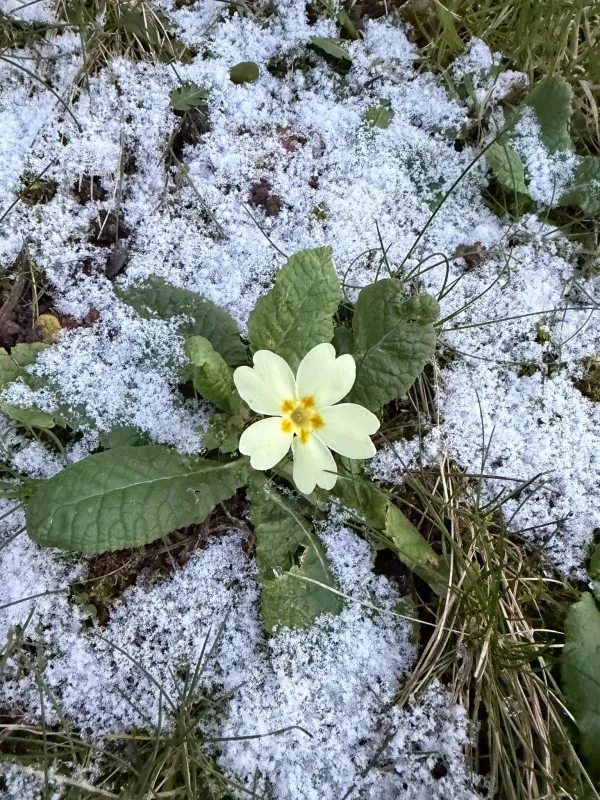
Description
Sowing dates
Sowing Primula vulgaris seeds is best performed in late winter or early spring to allow the plants to establish before the heat of summer. The seeds benefit from a period of cold stratification, which simulates natural winter conditions and significantly improves germination rates.
The planting medium must be fine-textured and moisture-retentive, yet well-draining. Because primrose seeds are sensitive to burial, they should be surface-sown and only lightly dusted with fine vermiculite or left exposed to light, which is crucial for triggering germination.
Vegetative propagation via crown division is also a standard agronomic practice. This is typically conducted immediately after flowering to ensure that the divided plants have ample time to re-establish their root systems before entering dormancy or the onset of heat stress.
When starting from seeds, keeping the environment consistently humid is vital for seedling survival. Use of germination chambers or plastic covers helps maintain the required microclimate until the first true leaves appear, at which point ventilation should be gradually increased.
Standard nursery practice involves transplanting seedlings into individual pots once they develop enough strength. Proper spacing is essential to encourage robust root growth and to prevent competitive stress among young plants during the pre-harvest phase.
Growing requirements
Primula vulgaris, a member of the Primulaceae family, is a perennial herbaceous plant native to temperate regions. It thrives in cool, moist environments and is adapted to woodland understory conditions, making it an excellent crop for partial shade.
The crop prefers fertile, loamy soils rich in organic matter with a slightly acidic to neutral pH. High organic content helps retain moisture while simultaneously providing necessary nutrients for the development of the basal rosette of leaves.
Water management is the cornerstone of primrose agronomy. While the plants require constant hydration, they are highly sensitive to waterlogged conditions, which lead to rapid root degradation. Automated irrigation systems are recommended for precision moisture control.
Temperature control is critical, as Primula vulgaris performs best at cool temperatures ranging from 12°C to 18°C. In commercial settings, shade cloths are frequently utilized to prevent heat spikes that can prematurely initiate senescence in the foliage.
Regular monitoring of soil fertility is recommended, as high nitrogen levels can promote excessive vegetative growth at the expense of floral development. Balanced, slow-release fertilizers are preferred to maintain consistent nutrient availability throughout the growth cycle.
Main diseases and pests
The health of the crop depends on rigorous pest and disease management protocols. Fungal infections such as anthracnose and rhizoctonia are common issues that target the crown and foliage, especially under high humidity or poor airflow conditions.
Root system integrity is frequently compromised by pythium root rot, which typically occurs in compacted or poorly drained growing media. Gray mold (Botrytis) is a significant threat that spreads rapidly in dense plant populations if ventilation is insufficient.
Viral pathogens, including tomato mosaic virus and tobacco mosaic virus, represent severe threats to crop uniformity. These diseases are usually transmitted by handling or insect vectors, necessitating strict sanitation practices and early detection measures.
Pests like the root-knot nematode cause significant damage by forming galls on the roots, which hinders nutrient uptake. Furthermore, rust diseases can significantly reduce the photosynthetic capacity of the plants, requiring the use of targeted systemic fungicides.
- Anthracnose and Gray mold
- Rhizoctonia and Pythium root rot
- Tomato mosaic virus (ToMV)
- Tobacco mosaic virus (TMV)
- Root-knot nematode and Rust