
Triumph Tulip
Tulipa triumph
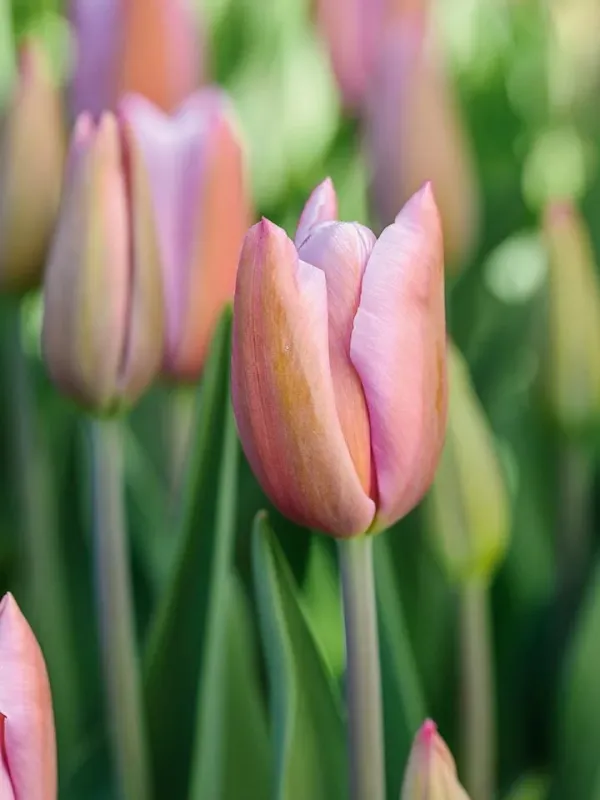
Description
Sowing dates
Triumph Tulip bulbs should be planted in the autumn when soil temperatures at a depth of 10–12 cm drop to 9–10 degrees Celsius.
In most temperate climates, the ideal window for planting is from late September through early October to allow for proper root development before winter.
Early planting in overly warm soil increases the risk of fungal infections, while planting too late stunts root growth and weakens the future flower stalk.
The bulbs are typically planted at a depth equal to three times their height, ensuring stability and sufficient protection against extreme cold.
Proper spacing is crucial to prevent the spread of diseases; bulbs should generally be placed 10–15 cm apart depending on their size and variety.
Growing requirements
Triumph Tulips belong to the Liliaceae family and are the result of cross-breeding Darwin Hybrid tulips with early-flowering single varieties.
These plants require sunny, well-draining locations that are protected from strong winds, which can easily snap their sturdy and upright stems.
The ideal soil is fertile, sandy-loam, or light clay with a neutral to slightly alkaline pH, as poor drainage often leads to bulb rot.
Regular watering is essential during the active growing season, particularly during the budding phase in spring to support large bloom development.
Balanced fertilization with NPK compounds applied in early spring and immediately after flowering is necessary for replenishing bulb energy reserves.
Yield
The economic success of Triumph Tulip cultivation relies on high-quality bulb production and a high multiplication rate during the growth cycle.
These tulips are highly valued for forcing, allowing commercial growers to produce high-quality cut flowers for the spring floral market.
Removing spent flower heads after blooming directs all the plant's energy into bulb maturation, significantly improving the yield for the following year.
Marketable yield is measured by the uniformity of stem height and the size of the iconic cup-shaped blooms produced by healthy, properly graded bulbs.
Adherence to strict storage protocols after harvest determines the longevity and blooming potential of the tulips during the subsequent planting season.
Main diseases and pests
Tulip breaking virus (TBV) is one of the most critical threats, causing streaks in petals that require immediate removal and destruction of affected bulbs.
Fungal diseases like Botrytis (tulip fire) and Fusarium basal rot are common, especially in environments with poor ventilation or high humidity levels.
Pests such as the Narcissus bulb fly and various species of mites target the basal plate, compromising the bulb's structural integrity and health.
Nematode infestations can lead to stunted growth and leaf deformation, necessitating soil fumigation or solarization in heavily infested areas.
- Apply fungicides during bulb treatment before autumn planting.
- Rotate crops to minimize the buildup of soil-borne pathogens.
- Regularly inspect the growing bed for signs of yellowing or distorted foliage.
Harvesting
Harvesting should occur when the foliage has turned yellow and withered, indicating that the bulb has finished its metabolic cycle for the season.
Careful extraction from the soil is vital to prevent bruising, as damaged tissues are highly susceptible to pathogens during the curing process.
Cleaned bulbs must be cured in a shaded, well-ventilated area to allow the outer tunics to dry properly before they are moved into long-term storage.
Grading by size helps in managing the planting density for the next season, ensuring a consistent bloom schedule for commercial or display purposes.
Maintaining specific temperature and humidity levels during storage is mandatory to ensure the physiological development of the flower bud inside the bulb.