
Parrot tulip
Tulipa parrot
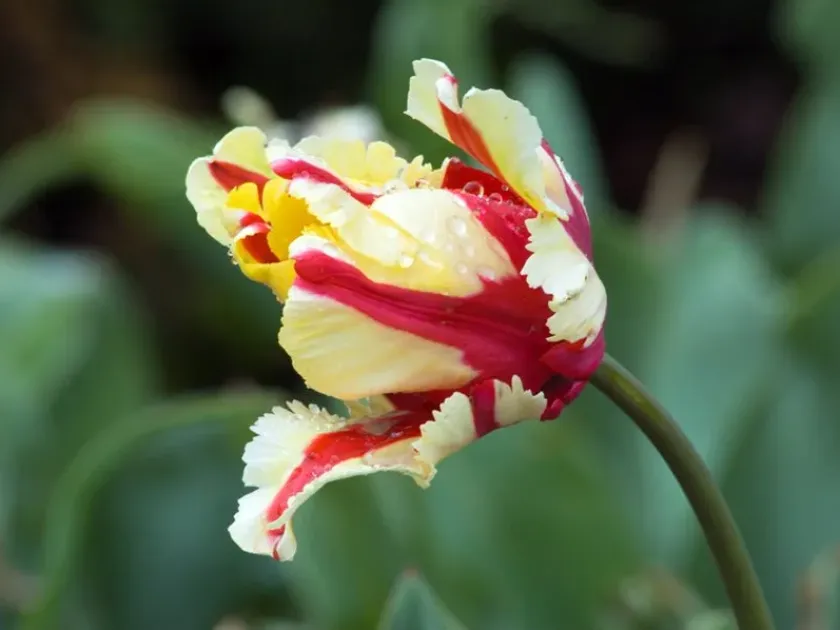
Description
Sowing dates
Planting of Parrot tulip bulbs (Tulipa parrot) in open ground should occur during the autumn season, specifically when soil temperatures at a depth of 10–12 cm drop to 9–10 degrees Celsius.
The ideal window for planting in temperate climates ranges from mid-September to mid-October, ensuring that roots establish firmly before the ground freezes in winter.
Early planting must be avoided to prevent premature growth that makes the shoots vulnerable to frost, while late planting inhibits proper root development and nutrient storage.
The depth of planting generally ranges from 12 to 15 cm, depending on the bulb size and soil texture, with slightly shallower planting recommended for heavier clay soils.
Spacing between bulbs is crucial, with a recommended distance of 10–15 cm to allow for adequate nutrient access and to facilitate airflow, which significantly reduces the risk of fungal infections.
Growing requirements
Parrot tulips belong to the Liliaceae family and require sites with excellent sunlight exposure, which is necessary for maintaining the unique, ruffled, and fringed petal structures.
The ideal soil for this crop is fertile, loose, and well-drained loam or sandy loam with a neutral to slightly alkaline pH, which prevents root rot and supports vigorous growth.
Effective drainage is non-negotiable for Parrot tulips; if the site has heavy soil, it is advised to improve it with organic matter and grit or to grow the plants in raised beds.
Regular watering is necessary during the active growing phase, particularly before flowering, though gardeners must ensure the soil is not waterlogged to maintain healthy bulb tissue.
Nutrition management involves applying balanced mineral fertilizers in three stages: early spring, during bud development, and post-flowering to support the replenishment of the replacement bulb.
Yield
The yield of Parrot tulips is quantified by the production of healthy daughter bulbs and the quality of cut flowers, which are highly regarded for their exotic appearance in professional floriculture.
This group of tulips is known for a slower multiplication rate than standard cultivars, necessitating precise agronomic practices to ensure the mother bulb's health is preserved for future seasons.
Annual excavation of bulbs after the foliage fades is a standard procedure in commercial production, allowing for quality grading and the maintenance of optimal storage conditions for flower bud initiation.
By following strict crop rotation protocols and avoiding planting on the same site for at least five years, producers can significantly enhance the volume and health of the harvested bulbs.
Strategic management of the planting density and soil moisture ensures high-quality decorative output, maximizing the economic return per square meter of cultivated land.
Main diseases and pests
Botrytis, commonly known as gray mold, is the primary threat to Parrot tulips, often thriving in high humidity conditions and causing severe damage to leaves and stems.
Tulip breaking virus, which causes irregular streaking on the petals, is transmitted by aphids and remains an incurable disease; therefore, infected plants must be rogueed immediately.
Pests such as the narcissus bulb fly larvae and thrips can cause significant damage to the root system and foliage, leading to stunted growth or total plant failure if left untreated.
Proactive disease and pest control include the disinfection of bulbs prior to planting and the use of targeted insecticide applications during the early stages of the growing season.
In addition to pathogens, small rodents may feed on the bulbs during winter, which often necessitates the use of protective mesh cages or other exclusion techniques in the field.
Harvesting
The harvest of Parrot tulips for cut flower markets is timed for the stage when the buds have acquired their characteristic color but have not yet fully opened, ensuring longevity during transport.
When cutting flowers, it is essential to retain at least two leaves on the stem to allow the plant to continue photosynthesis, which is critical for the development of the bulb.
Harvesting bulbs for storage begins once the foliage has turned yellow and withered, indicating that the bulb has completed its accumulation of energy reserves for the dormant period.
Post-harvest, the bulbs are dried in a shaded, well-ventilated area, cleaned of debris and roots, and then sorted by size before being placed into a temperature-controlled storage environment.
Small-sized daughter bulbs are categorized separately for replanting in nursery beds, where they are cultivated for 1–2 years until they reach a sufficient size to produce high-quality blooms.