
Woolly tulip
Tulipa lanata
Description
Growing requirements
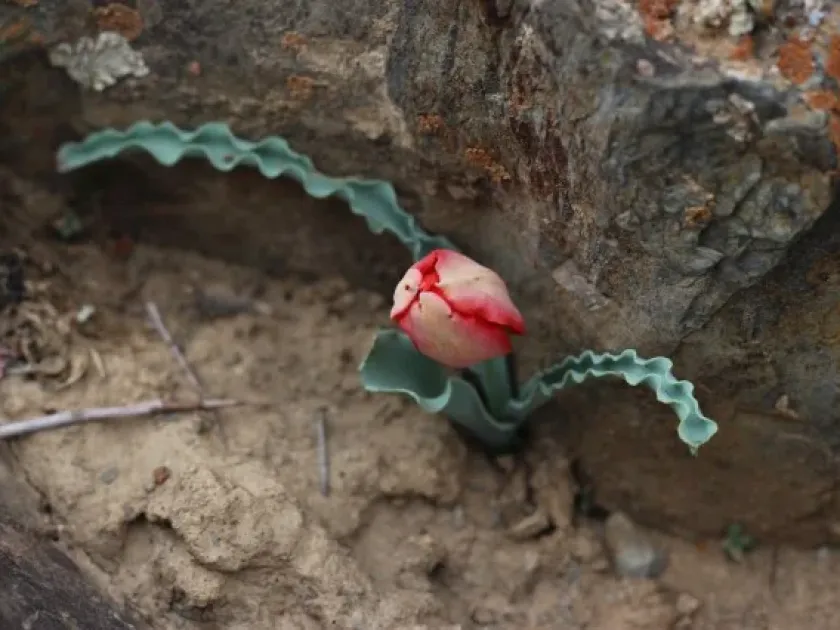
The woolly tulip (Tulipa lanata) is a distinct species belonging to the Lily family (Liliaceae). It originates from the high-altitude, rocky environments of Central Asia and Iran, which has defined its biological adaptation to harsh and varying climates.
The plant requires full sun exposure to flourish and maintain its structural integrity. In agricultural settings, it is essential to provide well-drained, porous soil that mimics its natural rocky habitat, preventing the bulb from rotting during dormant periods.
Climate requirements involve cold winters and dry, warm summers. The species is well-adapted to high-altitude radiation, which contributes to its unique pubescence—the fine, woolly hairs on the leaves and stems that provide thermal insulation.
Cultivation practices focus on managing moisture levels precisely. Water should be available during the spring growth and flowering stage, but should be strictly reduced as the foliage begins to die back, allowing the bulb to enter a proper dormancy.
This crop is primarily used in specialized ornamental horticulture and rock gardens where its unique texture and striking flower colors provide high aesthetic value. It is often preferred by collectors of wild species rather than common garden hybrids.
Main diseases and pests
The most significant threats to Tulipa lanata are fungal pathogens, specifically those causing bulb rot and gray mold (Botrytis). These conditions are almost always linked to poor drainage or overly compacted, damp soil.
Pests such as the tulip bulb mite and various root-feeding insects can cause significant damage to the plant's vascular system, often leading to stunted growth or complete plant failure during the peak of the season.
Integrated pest management involves selecting clean, disease-free stock and using systemic fungicides during the planting phase to ensure the bulbs remain healthy throughout the critical early rooting stage.
Vertebrate pests, specifically voles and mice, pose a threat to the dormant bulbs. Protecting the bulbs with physical barriers such as wire baskets is a common and highly effective method used by horticulturists.
Rotation of planting sites every few years is highly recommended to prevent the buildup of soil-borne pathogens, ensuring the longevity and health of the population.