
Double tulip
Tulipa double
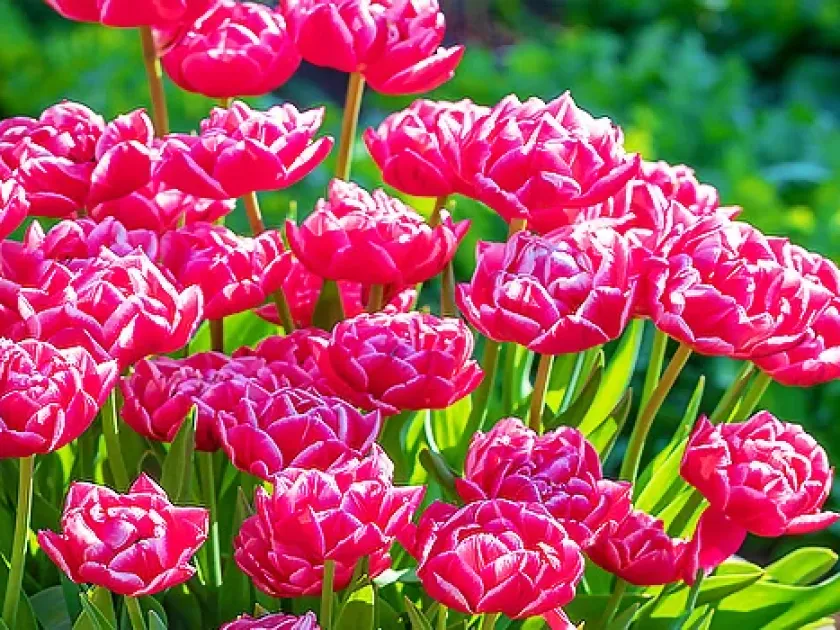
Description
Sowing dates
Planting double tulip bulbs is best performed in autumn, when soil temperatures at a depth of 10-12 cm drop to 9–10°C. In temperate climates, this typically occurs from late September to mid-October, allowing roots to establish before winter.
The recommended planting depth is 12–15 cm, generally three times the height of the bulb. Proper depth is crucial, as too shallow planting increases frost risk, while excessive depth delays development and reduces the multiplication rate.
Maintain a spacing of 10–15 cm between bulbs within rows and 20–25 cm between rows. Double tulip varieties require adequate space for proper air circulation to prevent fungal pathogens from taking hold.
For forced cultivation in greenhouses, bulbs are planted in pots or flats in October or November. They require a cooling phase at 5–9°C for approximately 14–16 weeks to ensure proper flower initiation and stalk growth.
Once the cooling period is complete, move the plants into a warmer environment (18–20°C). Increased light levels are essential during this stage to ensure the heavy double blooms are well-supported by the stem.
Growing requirements
Double tulips belong to the Liliaceae family and are sophisticated horticultural hybrids derived from wild Asian species. They thrive in open, sunny locations protected from strong, drying winds which can damage the heavy, petal-filled blooms.
The ideal substrate is well-drained, fertile, and slightly alkaline or neutral. Good drainage is the most critical factor, as stagnant water is the leading cause of basal rot in tulip bulbs.
Consistent moisture is required throughout the growing season, particularly during the budding stage. However, it is vital to keep foliage dry to discourage botrytis and other fungal leaf infections.
A balanced fertilization schedule is essential: nitrogen early in the season promotes leaf vigor, while phosphorus and potassium during bud formation ensure high-quality, long-lasting flowers and strong bulb recovery.
Annual lifting of the bulbs after foliage senescence is recommended for double varieties. This allows for sorting, prevents bulb congestion, and ensures that the storage phase takes place under controlled conditions.
Main diseases and pests
Tulip breaking virus (TBV) is a primary concern for high-quality production, often spread by aphids. Infected plants should be identified by irregular color patterns and immediately rogued to protect the remaining crop.
Grey mold (Botrytis tulipae) is a common fungal threat that thrives in cool, humid conditions. Preventive measures include ensuring good spacing, proper crop rotation, and the use of fungicide-treated bulbs.
The bulb mite (Rhizoglyphus) is a persistent pest that feeds on the basal plate, causing poor growth or complete failure of the plant. Maintaining hygiene during storage is key to controlling this pest.
Aphids are a significant nuisance, as they drain sap and act as vectors for viral pathogens. Consistent monitoring and the use of systemic insecticides are standard agronomic practices for commercial tulip fields.
Small rodents can cause extensive damage to bulbs overwintering in the soil. Protecting the planting area with wire mesh or using specialized barriers can significantly reduce loss rates in susceptible areas.
Harvesting
Harvest bulbs once the foliage has turned yellow and withered by about two-thirds. Delaying the harvest risks bulb loss in the soil due to the degradation of the protective outer scales.
Gently lift the bulbs and remove excess soil. Sort them by size and discard any showing signs of bruising, rot, or insect damage to ensure only the highest quality material goes into storage.
Curing is a vital step: spread the bulbs in a well-ventilated, shaded area at 20–25°C for 2–3 weeks. This allows the skins to dry and toughen, improving the bulbs' longevity during storage.
Storage should be conducted in a cool, dark, and well-ventilated space. After the initial curing, gradually decrease the temperature to 15–17°C to maintain the bulbs in a dormant state until planting.
For commercial growers, proper labeling and keeping an inventory of varieties are essential during the storage period to facilitate efficient planting layouts for the subsequent season.