
Two-flowered tulip
Tulipa biflora
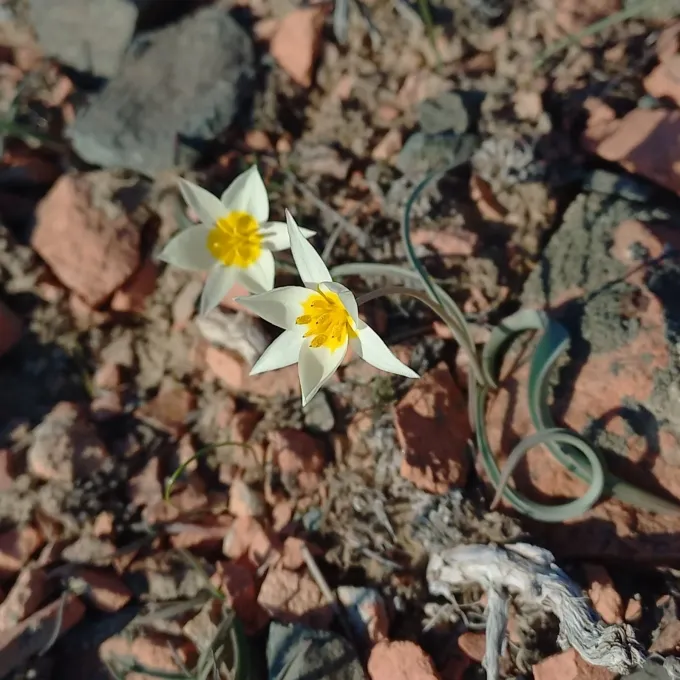
Description
Sowing dates
The planting of Tulipa biflora bulbs is ideally carried out during the autumn months, specifically from September to late October.
It is crucial to plant the bulbs at a time when the soil temperature has dropped, allowing the roots to develop before the ground freezes.
Bulbs should be placed at a depth of approximately 8-10 centimeters, depending on the bulb size, to protect them from extreme winter weather.
Spacing should be maintained at about 10-15 centimeters between plants to ensure adequate airflow and nutrient access for each individual.
Providing a layer of coarse sand at the bottom of the planting hole is a recommended practice to improve drainage and prevent rot during dormant months.
Growing requirements
The Two-flowered tulip belongs to the Liliaceae family and is native to the steppe regions, adapting well to rocky and arid environments.
This species thrives in full sun and requires an open, unobstructed location to ensure healthy blooming and proper bulb maturation.
Well-drained soil is a non-negotiable requirement; sandy or gravelly loam is preferred to prevent moisture accumulation around the bulbs.
The plant is highly drought-tolerant, requiring minimal irrigation except during the active spring growth phase when the plant is pushing up flowers.
During the summer dormancy, the bulbs need a dry and warm environment, mimicking the natural conditions of their native habitat.
Main diseases and pests
Fungal diseases, particularly grey mould and fusarium rot, are the primary threats, often induced by waterlogged soil conditions.
Regular inspection of the planting site is necessary to identify early signs of pathogen spread, such as yellowing or wilting of the foliage.
Pests like bulb mites and onion flies can damage the root system, causing the plant to weaken and fail to produce flowers the following season.
Rodents, including mice and voles, are significant threats to bulbs and often require the use of protective mesh cages during planting.
Prevention involves rotating planting locations, ensuring proper site drainage, and applying appropriate fungicidal treatments if necessary.