
Tulipa acuminata
Tulipa acuminata
Description
Sowing dates
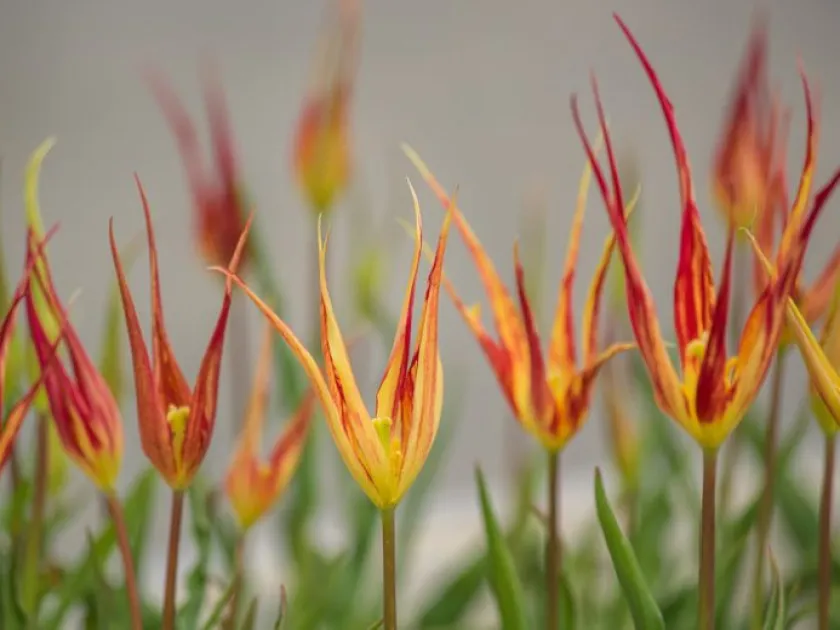
Tulipa acuminata, commonly known as the Fire Flame tulip, is a rare botanical species belonging to the Liliaceae family. Originating from historical regions in Turkey, this plant is highly valued by collectors for its distinctive, elongated, and pointed petals, which differ significantly from traditional tulip shapes.
Planting in the garden should occur in the autumn, allowing the bulbs to establish root systems before the ground freezes. Aim to plant them when soil temperatures are consistently below 12 degrees Celsius, usually between late September and mid-October, depending on the climatic zone.
The optimal planting depth is approximately three times the diameter of the bulb. Providing sufficient depth helps protect the bulb from sudden frost cycles and prevents the plant from emerging prematurely during early warm spells in late winter, which could lead to flower damage.
Selecting a permanent spot is advisable for this species, as Tulipa acuminata thrives best when left undisturbed for several years. Frequent lifting and replanting can stress the bulbs and potentially reduce the vigor of the plant over subsequent seasons.
Propagation is typically achieved through natural offsets or bulblets that form around the main bulb. These should be separated during the dormancy period after the foliage has turned yellow, ensuring that each offset is planted with enough room to mature over the next few growing cycles.
Growing requirements
The primary requirement for successful cultivation is excellent soil drainage. Tulipa acuminata is particularly sensitive to waterlogged conditions, which can lead to basal rot. Incorporating coarse sand or fine grit into the planting holes can significantly improve drainage in heavy soils.
The ideal soil type is a sandy loam with a neutral to slightly alkaline pH. If the soil is too acidic, adding agricultural lime or wood ash can help balance the conditions, creating a more suitable environment for root development and nutrient uptake.
Sunlight is critical for this species. It requires a full-sun location to ensure the bulb stores enough energy for the following year's growth and to prevent the stem from becoming weak or spindly, which is a common occurrence in shaded or semi-shaded environments.
Water management should mirror its native arid environment. During the growing season, moderate irrigation is sufficient, but it is vital to keep the soil relatively dry during the dormant summer phase to prevent bulb rot and encourage natural ripening of the tissues.
Minimal fertilization is usually sufficient. A balanced, low-nitrogen slow-release fertilizer can be applied in early spring as the shoots emerge, which helps support healthy flower development without causing excessive foliage growth at the expense of bulb vitality.
Main diseases and pests
Fungal pathogens such as Botrytis tulipae (fire disease) represent the most significant threat to Tulipa acuminata. These fungi thrive in damp, stagnant air and can cause necrotic spots on leaves and flowers, eventually leading to the collapse of the entire stem.
Preventative measures include ensuring proper air circulation by avoiding overcrowding during planting. If infection is detected, affected plants must be removed immediately to prevent spores from spreading via wind or water splashes to neighboring healthy specimens.
Pests like aphids can be detrimental, not only by direct feeding but by acting as vectors for viral diseases such as tulip breaking virus. Using insecticidal soaps or systemic treatments during the early growth stages is recommended to keep aphid populations under control.
Bulb mites can damage the underground parts of the plant, often entering through wounds caused during handling or by other soil-dwelling insects. Pre-planting treatment with specialized fungicidal or insecticidal dips can offer a protective layer against such infestations.
Rodents such as voles are frequently attracted to tulip bulbs. Planting the bulbs in wire mesh baskets or using repellents around the garden perimeter can effectively prevent these small mammals from consuming the collection during the dormant winter months.