
Ciliate lily
Lilium ciliatum
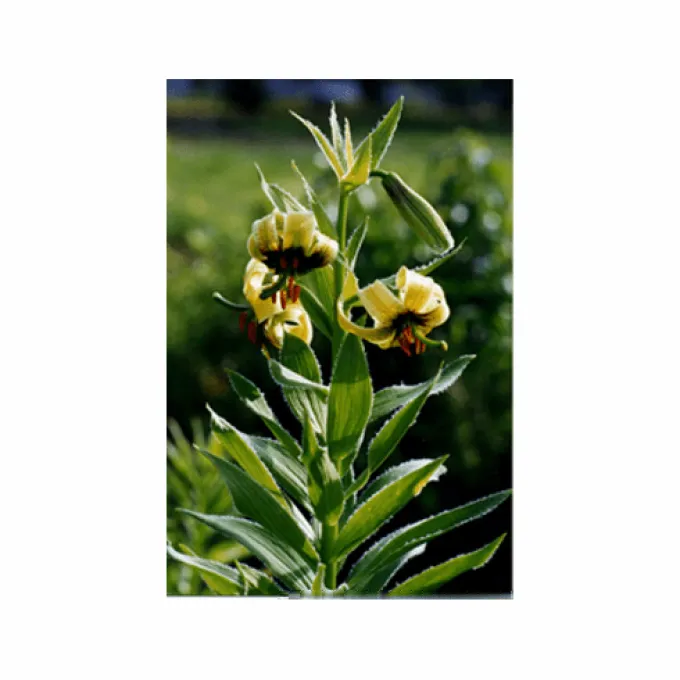
Description
Growing requirements
Ciliate lily (Lilium ciliatum) is a bulbous perennial belonging to the Liliaceae family. It is a rare species native to the mountainous regions of Turkey, adapted to forest clearings and rocky habitats.
The climate requirements for this species include cool to moderate temperatures and high air humidity. It thrives in environments where soil moisture remains consistent throughout the spring growth period.
Regarding soil, it prefers a well-draining, loose, and humus-rich substrate. The soil should be slightly acidic to neutral; alkaline soils may cause nutrient deficiencies and stunted growth in this specific species.
Agricultural practices involve planting bulbs at a depth of 10-15 cm during the autumn. A layer of organic mulch is recommended to protect the bulb from temperature extremes and to preserve soil humidity.
Propagation is generally performed through bulb scaling or dividing established clumps every 3-4 years to ensure the plants do not become overcrowded and maintain high flowering quality.
Main diseases and pests
The primary botanical challenge with Lilium ciliatum is its susceptibility to Botrytis blight. This fungus manifests as brown spots on leaves and stems, rapidly spreading in humid and stagnant air.
Basal rot caused by Fusarium species is another major concern. It typically starts at the roots and destroys the bulb, making the plant non-viable if not detected and treated early.
Pest pressure mainly comes from the Lily Beetle (Lilioceris lilii). These beetles and their larvae can cause severe defoliation, significantly reducing the energy reserves of the bulb for the next year.
Aphids often act as vectors for viral diseases, which cause mosaic patterns on foliage and overall plant decline. Controlling the aphid population is essential for virus prevention.
Integrated pest management, including regular inspection of the lower leaf surfaces and the use of approved insecticides when necessary, provides the best protection for these lily beds.