
Geogenanthus ciliatus
Geogenanthus ciliatus G. Brückn.
Description
Growing requirements
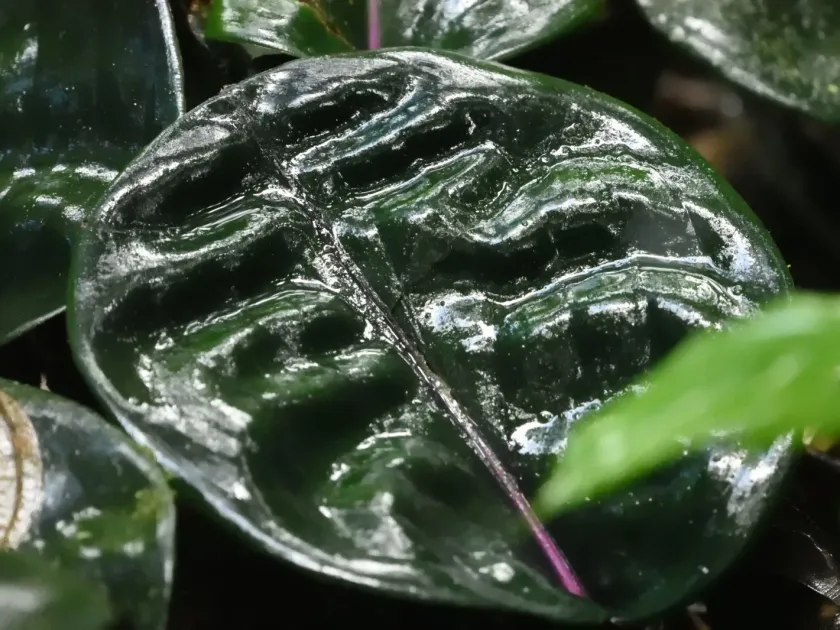
Geogenanthus ciliatus is a captivating species belonging to the Commelinaceae family. Native to the tropical rainforests of Peru and Ecuador, it is highly prized by collectors for its dark, glossy, purple-hued leaves that display a distinct ruffled texture.
The plant thrives in stable tropical conditions with temperatures ranging between 18°C and 24°C. It is extremely sensitive to cold drafts and sudden drops in temperature, which can cause significant tissue damage to its succulent-like foliage.
High humidity is essential for the healthy growth of this species. It is a classic choice for terrariums or high-humidity greenhouse environments where it can maintain its lush appearance without the risk of leaf edge desiccation.
The ideal soil substrate for Geogenanthus ciliatus should be highly aerated, moist-retentive, and slightly acidic. A mix consisting of peat moss, perlite, and coconut fiber provides the necessary structure to support healthy root development.
Regarding light, the plant prefers filtered, indirect sunlight or moderate shade. Direct exposure to intense solar radiation will quickly burn the leaves, causing them to lose their characteristic dark purple depth and vigor.
Main diseases and pests
Root rot is the most frequent challenge for growers, typically triggered by overwatering or inadequate soil drainage. It is critical to allow the top layer of the substrate to dry slightly between waterings.
Spider mites represent the primary pest threat, especially in indoor environments with low humidity. These pests feed on plant cells, leaving pale speckles on the leaves and eventually causing foliage drop.
Mealybugs can often be found congregating in the axils of the leaves or along the stems. Regular inspection and localized treatment with insecticidal soap are effective methods to keep populations in check.
Fungal leaf spot diseases may occur if the ambient air remains stagnant for too long. Improving air circulation around the plant is an effective preventative measure against various moisture-related pathogens.
Loss of leaf color and weak growth are common indicators of insufficient light or nutrient deficiency. Maintaining a consistent feeding schedule with a balanced liquid fertilizer during the growing season is recommended.