
Triteleia laxa
Triteleia laxa Benth.
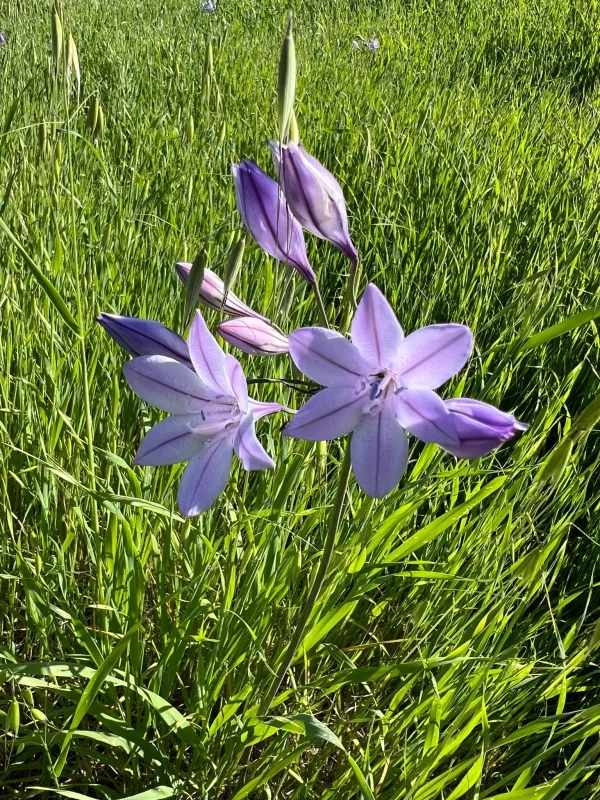
Description
Sowing dates
Planting bulbs of Triteleia laxa in open ground is primarily done in autumn, before steady frosts occur, to allow the plant enough time to establish its root system.
In regions with harsh winters, spring planting is a common practice, although it may lead to later flowering of the crop in the current season.
Bulbs should be planted at a depth of 10–12 centimeters, depending on the soil composition and texture, maintaining a spacing of at least 10–15 centimeters between them.
When grown in containers or greenhouses, planting schedules can be flexible, allowing for better control over the production time of cut flowers.
The optimal temperature for the initiation of active growth and root development is around +10 to +15 degrees Celsius.
Growing requirements
Triteleia laxa belongs to the Asparagaceae family and is native to California, which determines its high requirements for light and warmth.
The crop prefers well-drained, fertile soil with a neutral to slightly acidic pH and does not tolerate stagnant water in the bulb zone under any circumstances.
For successful development, the plant requires intense sunlight, although light shade is acceptable in regions with extremely hot and dry climates.
During the vegetation and flowering stages, the plant requires moderate but regular watering, which should be reduced after flowering to encourage dormancy.
The plant has moderate frost resistance, and in cooler climates, it requires mandatory winter mulching or lifting the bulbs for storage.
Yield
The agricultural use of Triteleia laxa is focused on producing high-quality decorative material for floral arrangements, as the inflorescences are very long-lasting.
Yield depends on planting density and the quality of the bulbs; in optimal conditions, a single plant produces a robust stalk with 20 to 50 individual flowers.
Mass flowering occurs in late spring and early summer, making it a valuable element for seasonal flower production cycles.
For commercial cultivation intended for cut flowers, it is crucial to apply fertilizers rich in potassium and phosphorus to strengthen the flower stalks.
Increasing marketable yield is achieved by consistently using high-quality, disease-free bulbs of the first or second size grade.
Main diseases and pests
The main threat to this crop is excessive soil moisture, which triggers the development of fungal rots affecting the basal plate and the root system.
Among pests, the larvae of the onion fly and various types of nematodes pose the greatest danger and can severely damage the planting material.
In greenhouse conditions with poor ventilation, plants can suffer from aphid infestations, which sap nutrients from the leaves and stalks.
Disease prevention includes mandatory disinfection of bulbs before planting using fungicide solutions and strict control over substrate moisture levels.
Timely removal of symptomatic or damaged plants significantly reduces the spread of viral infections characterized by leaf mosaic patterns.
Harvesting
Flower stalks of Triteleia laxa should be harvested when the first 2–3 lower buds on the inflorescence begin to open, ensuring maximum vase life.
Tools used for harvesting must be sharp and disinfected to prevent the transmission of pathogens through open cuts.
After harvesting, flowers should be placed immediately into cool water to prevent wilting during hot weather conditions.
If the cultivation goal includes bulb propagation, it is essential to allow the foliage to yellow and wither naturally after flowering finishes.
Bulbs are lifted after the aerial parts have completely died back, then dried in a shaded area and stored in dry, well-ventilated conditions.