
Salacca magnifica
Salacca magnifica
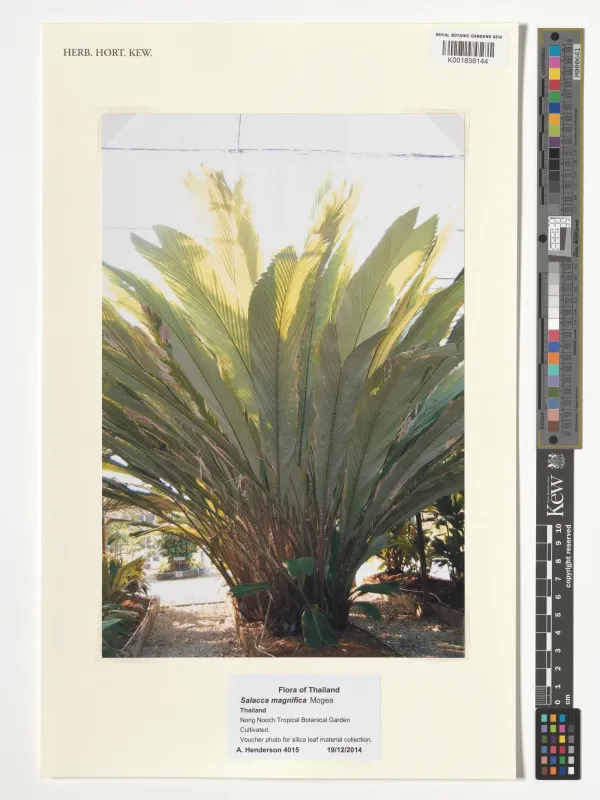
Description
Growing requirements
Salacca magnifica is a stunning member of the Arecaceae family, native to the tropical rainforests of Borneo. This species is recognized for its impressive, large pinnate leaves and its habit of growing in the shade of dense forest canopies.
Botanically, it is classified as a clustering palm that thrives under stable tropical conditions. To cultivate this plant successfully, one must maintain high humidity levels, ideally exceeding 70 percent, throughout the entire growing season.
The soil requirements are specific: the substrate must be highly organic, slightly acidic, and exceptionally well-draining. Because these plants naturally occur in forest leaf litter, they prefer a top layer rich in decaying organic matter to support their surface roots.
Temperature management is vital, as Salacca magnifica is intolerant to cold. The ideal range is between 22 and 30 degrees Celsius. Exposure to temperatures below 15 degrees Celsius for prolonged periods will lead to significant physiological stress.
Regular irrigation is necessary to ensure the soil remains consistently moist, though never waterlogged. Using rain water or filtered water is recommended to avoid the buildup of salts, which can scorch the sensitive root system of this species.
Main diseases and pests
The primary threats to this palm include root rot caused by stagnant water and poor soil aeration. These conditions promote the growth of pathogens that quickly compromise the health of the plant's root system.
Pests such as spider mites and mealybugs are the most common adversaries in indoor or greenhouse environments. These insects often colonize the undersides of the leaves, drawing sap and weakening the palm's vigor.
Fungal leaf spot is another concern in areas with high humidity and limited airflow. It is essential to ensure that the environment is adequately ventilated to prevent moisture from settling on the leaves for extended periods.
Regular inspections are recommended to detect early signs of infestation or disease. Early intervention, such as pruning affected fronds or applying organic soaps, is far more effective than heavy chemical treatment.
Maintaining proper hygiene by removing dead plant matter from the soil surface prevents the proliferation of soil-borne pests. Providing a balanced, nutrient-rich environment helps the palm develop the resilience needed to resist minor infections.