
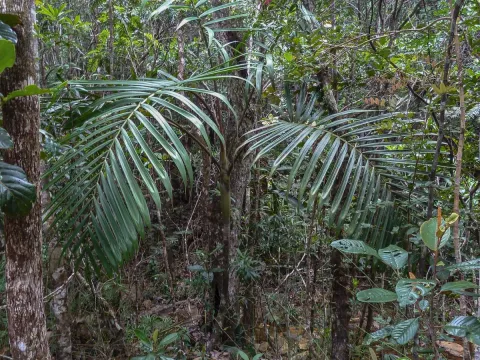
Actinokentia
Actinokentia
Actinokentia is a small genus of palms in the family Arecaceae. These palms are endemic to New Caledonia, where they grow in dense, humid tropical forest environments that offer protection from direct sunlight and harsh weather conditions.
What the section contains

Actinokentia
Botanically, these plants are known for their solitary, slender trunks and gracefully arching, pinnate leaves. Their growth habit is relatively slow, making them highly prized specimens in botanical collections and specialized interior landscaping projects.
To cultivate Actinokentia successfully, one must replicate its natural humid and warm habitat. The plant requires constant temperatures between 22°C and 28°C and should never be exposed to freezing conditions, which can be fatal to the plant.
The substrate must be highly porous and rich in organic matter. A mixture of forest soil, coco coir, and perlite provides the necessary aeration and moisture retention. Proper drainage is crucial to prevent the accumulation of stagnant water in the root zone.
Lighting requirements are specific: this palm thrives in bright, filtered light. Direct sunlight can scorch the leaves, while deep shade will cause the plant to become etiolated and lose its compact, robust appearance over time.
The most significant threat to Actinokentia is root rot, primarily caused by waterlogged soil and poor air circulation. Overwatering is the most common mistake made by growers when managing this species in a containerized environment.
Spider mites are a persistent threat, especially in low-humidity environments. These pests feed on the sap of the leaves, causing stippling and eventual leaf drop if left untreated by specific acaricides or high-humidity interventions.
Scale insects often colonize the undersides of the leaves and the petioles. Manual removal followed by the application of horticultural oils is effective for managing mild infestations before they cause severe damage to the plant's vascular system.
Leaf spot diseases, often fungal in origin, can appear when the plant is kept in environments with poor air exchange. Maintaining good airflow around the canopy is essential for disease prevention and overall plant vigor.
Finally, nutritional deficiencies can lead to leaf discoloration. Using a balanced, slow-release fertilizer enriched with micro-nutrients, applied sparingly during the growing season, helps maintain the plant's deep green foliage and structural health.