
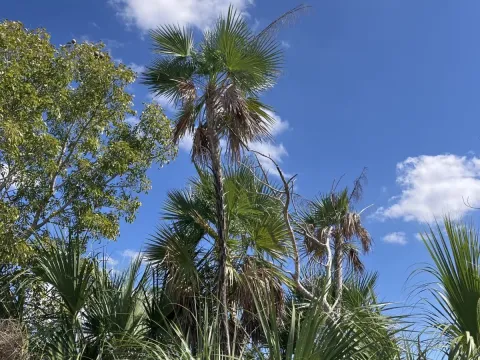
Acoelorraphe
Acoelorraphe
Acoelorraphe, commonly known as the Paurotis palm or Silver saw palm, is a genus in the Arecaceae family. This species is unique for its clustering habit, where thin, slender trunks emerge from a single root system to form a dense, attractive colony.
What the section contains

Acoelorraphe
Native to the swampy forests of Central America, the Caribbean, and Florida, this palm is naturally adapted to high-moisture environments. It thrives in wetland margins, making it an excellent candidate for regions with significant annual rainfall.
In terms of climatic requirements, Acoelorraphe prefers full sun but can tolerate partial shade. It is a frost-sensitive plant and requires protection if temperatures drop below freezing, making it ideal for tropical and subtropical hardiness zones.
The soil requirements involve moist, well-draining conditions. While it can handle periodic flooding, it performs best in soils that are rich in organic matter. A slightly acidic to neutral soil pH is preferred for optimal nutrient uptake.
The economic and landscaping use of this culture is primarily ornamental. It is widely planted in public parks and private gardens to serve as a natural privacy screen or a majestic focal point in tropical landscape designs.
Pests such as scale insects and mealybugs are the most common threats to Acoelorraphe. These insects congregate in the leaf bases, potentially weakening the plant and encouraging the growth of sooty mold.
Root rot, often caused by poor drainage or overly compacted soil, is a primary pathological risk. It can lead to rapid decline if environmental conditions are not corrected promptly by improving soil aeration.
Nutrient deficiencies, particularly involving magnesium and potassium, can manifest as yellowing or spotting of the foliage. Implementing a specialized fertilization program for palms is essential for maintaining aesthetic appeal.
In humid, stagnant environments, fungal leaf spots may occur. Increasing airflow around the canopy and avoiding overhead watering can significantly mitigate the risk of these infections.
Regular inspection of the trunks and leaves for early signs of infestation is recommended. Integrated pest management, including horticultural oils and biological controls, can effectively sustain the health of the palm stand.