
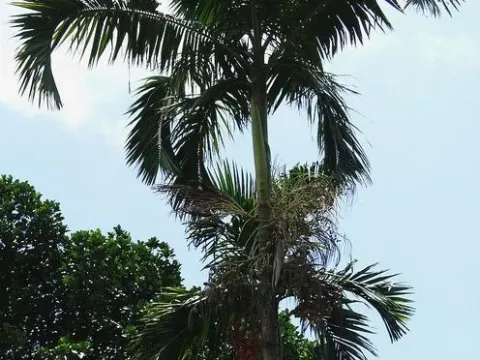
Actinorhytis
Actinorhytis
Actinorhytis, specifically the species Actinorhytis calapparia, is propagated primarily through seeds. For successful cultivation, seeds should be collected when ripe and planted immediately, as they possess short viability and can easily desiccate.
What the section contains

Actinorhytis
The seeds require a porous, moisture-retentive growing medium. Proper moisture management is essential during the germination phase to ensure the seed embryo remains hydrated without becoming waterlogged, which can trigger fungal rot.
Optimal germination occurs under consistent tropical temperatures, typically between 25 and 30 degrees Celsius. In these conditions, seedlings often emerge within several weeks, provided the medium is kept uniformly warm and moist.
Once seedlings develop their first true leaves, they should be carefully transplanted into individual pots. The roots are delicate and sensitive to disturbance, so great care must be taken to minimize trauma during the transfer process.
Young plants benefit from filtered light to prevent leaf scorching. As they mature, they can be gradually introduced to brighter environments, which helps in developing stronger, more robust stems and foliage characteristic of this palm.
As a member of the Arecaceae family, Actinorhytis is native to the tropical rainforests of the Pacific, particularly New Guinea. It thrives in high-humidity environments and requires a steady, warm climate with minimal seasonal fluctuations.
The soil must be rich in organic matter and offer excellent drainage. While the palm enjoys moisture, it cannot tolerate "wet feet." Ensuring that the potting mix or soil does not compact is vital for long-term health and vigor.
Temperature stability is paramount for this palm. It is highly sensitive to cold and should be kept away from temperatures below 18 degrees Celsius. Protection from dry winds and direct, harsh sunlight is also necessary during the early stages of life.
Lighting requirements change as the plant ages. Mature specimens often prefer bright, direct light to stimulate flowering and fruit production. However, during the juvenile stage, they are best kept under the canopy of larger plants or in shaded areas.
Routine care involves regular fertilization with balanced, micronutrient-rich fertilizers, especially during the peak growing season. Maintaining a high humidity level around the plant via misting or proximity to other vegetation is also highly recommended.
The economic value of Actinorhytis is mainly localized. In its native range, the fruit of the palm is utilized for cultural and ceremonial purposes, often serving as a chewing stimulant similar to the areca nut.
Fruit production occurs in clusters on mature trees. The yield is seasonal and requires manual harvesting, as the clusters must be carefully cut to avoid damaging the palm’s trunk or future floral bracts.
While not a major commercial global crop, the palm provides non-timber forest products in its indigenous regions. The fibers derived from the plant are sometimes used in local craft industries for weaving or small-scale building purposes.
Productivity is significantly linked to the quality of the soil and the consistency of tropical rainfall. In managed garden or semi-cultivated settings, yield is usually optimized through supplemental organic mulching and consistent irrigation.
Future development of the crop may focus on better understanding its horticultural needs to expand its presence in tropical landscaping, where its unique architectural form makes it a highly desirable ornamental plant.
Fungal pathogens represent the most significant threat to the health of Actinorhytis, particularly those targeting the root system. Overwatering or poor drainage often serves as a catalyst for these devastating infections.
Pests such as scale insects and mealybugs are common adversaries. They colonize the underside of leaves and along stems, extracting sap and weakening the plant, which often leads to stunted growth and leaf chlorosis.
Spider mites can become problematic in low-humidity settings. These tiny pests are notoriously difficult to spot until damage manifests as silvery or yellowish stippling on the leaves, eventually leading to senescence.
In tropical climates, wood-boring beetles can also infest the trunk. Such damage is difficult to treat and can compromise the structural integrity of the palm, making regular observation of the trunk and crown critical for prevention.
Proactive management includes ensuring good airflow around the plants and isolating any infested specimens. Biological controls or targeted horticultural oils are often preferred over broad-spectrum pesticides to maintain the health of the surrounding ecosystem.