
Broadleaf lady palm
Rhapis L.f. ex Ait.
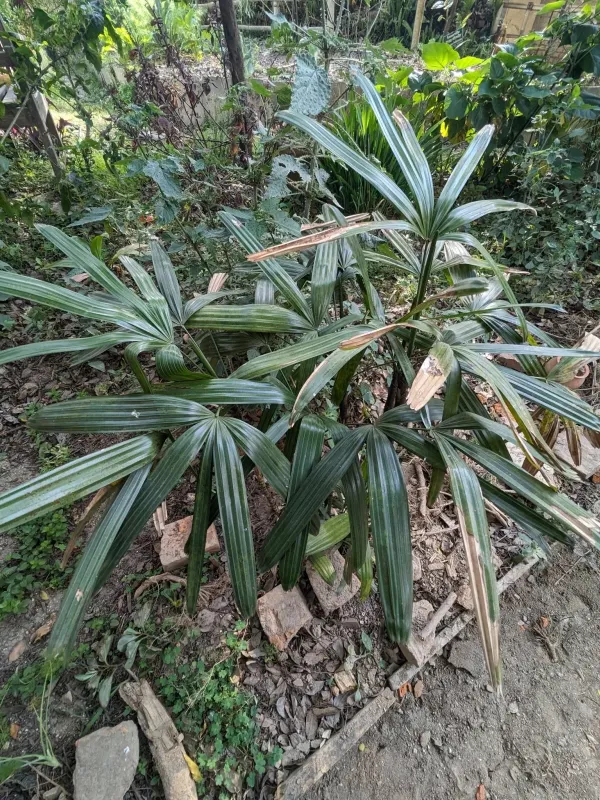
Description
Growing requirements
The Broadleaf lady palm (Rhapis excelsa) is a perennial member of the Arecaceae family. Originally native to subtropical regions of Southeast Asia, it has become a staple in indoor landscaping due to its resilience and aesthetic appeal.
Botanically, this species is characterized by multi-stemmed, cane-like stalks covered in fiber, topped with deeply segmented, fan-shaped leaves. It grows slowly, making it an excellent long-term investment for interiors and shaded garden areas.
Optimal growth requires bright, indirect light. While it is known for its shade tolerance, extreme darkness will stall growth. A temperature range between 18°C and 24°C is ideal for keeping the plant in a state of healthy vegetative activity throughout the year.
The substrate must be well-draining to prevent root rot. A high-quality peat-based mix with added perlite or bark chips provides the necessary aeration that the fine root system of the lady palm requires to thrive.
Fertilization should be performed during the growing season using a balanced, water-soluble fertilizer. It is crucial to flush the soil with water periodically to prevent the accumulation of mineral salts, which can lead to leaf burn.
Main diseases and pests
Scale insects are a common pest that often hides in the fiber of the stalks or along the veins of the leaves. These pests are difficult to eradicate manually and may require the application of systemic insecticide sprays.
Spider mites are a persistent threat in low-humidity environments. They cause stippling and discolouration on the foliage, eventually leading to a complete loss of the leaf if not addressed with increased humidity or miticides.
Root rot is the most lethal condition for Rhapis excelsa, typically caused by overwatering or poor drainage. Once established, it can kill the plant quickly, necessitating immediate repotting and soil replacement.
Fungal leaf spots can occur when the foliage is kept excessively wet, especially in areas with poor air circulation. Providing adequate spacing and ventilation helps mitigate these risks significantly.
Mealybugs can cluster in leaf crevices, causing white, cottony deposits. Routine inspection and cleaning of the plant surfaces are the most effective preventive measures against these infestations.