
Date palm hybrids
Phoenix hybrids
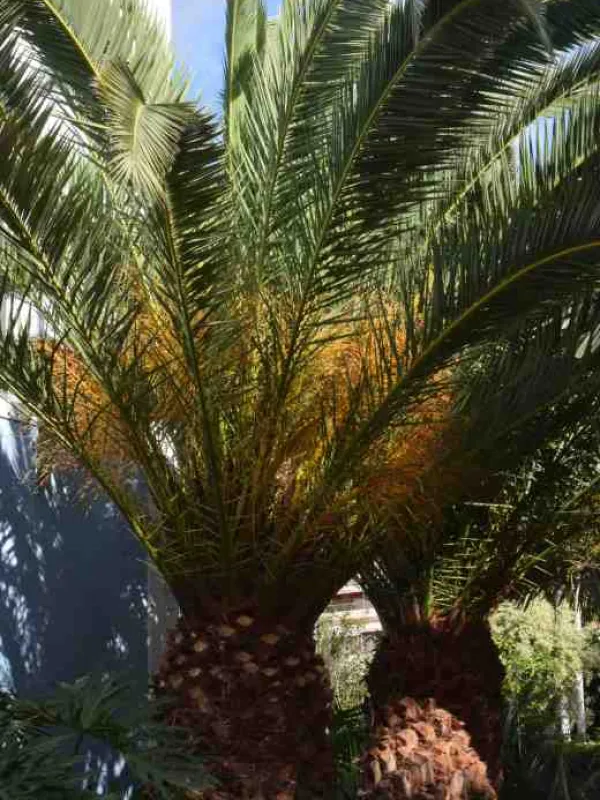
Description
Sowing dates
Propagation of date palm hybrids is primarily achieved through offshoots (vegetative propagation) rather than seeds. This method is critical for maintaining the specific genetic and fruit quality characteristics of the hybrid, which would otherwise be lost through cross-pollination.
Seed propagation is reserved for breeding programs aimed at developing new, more resilient cultivars. Germination requires a consistent, warm soil temperature of 25–28°C and a well-aerated, sterile substrate.
Offshoots should be separated from the parent tree during the dormant season. It is vital to ensure the offshoot has developed its own root system, as this significantly increases the survival rate after transplantation.
Once separated, young plants are kept in greenhouse conditions with high humidity and controlled temperatures. Proper acclimatization is necessary to prepare the young palm for the harsher environment of the open plantation.
Transplanting into the field is carried out only after the palm has established a strong, healthy foliage canopy. Ensuring the plant is vigorous enough is the key to successful establishment in the field.
Growing requirements
Date palm hybrids belong to the Arecaceae family and thrive in hot, arid, or semi-arid climates. They are considered megathermal plants, meaning they require high heat accumulation throughout the growing season.
Optimal growth is achieved with constant, direct sunlight. Partial shade significantly reduces the photosynthetic efficiency of the palms and can lead to leggy, weakened growth patterns.
While extremely heat-tolerant, date palms require good water availability to achieve high yield. Modern industrial plantations rely heavily on precision drip irrigation to provide consistent moisture to the root zone.
The soil should be deep, well-drained, and free from high water tables. Although they are highly tolerant of soil salinity, performance is best in sandy or alluvial soils with a pH ranging between 6.0 and 8.0.
Climatic requirements also include low atmospheric humidity during the fruit maturation stage. High humidity near harvest can trigger fungal infections and cause the fruit skins to split.
Yield
Yield in hybrid date palms is a function of the genetic selection, age of the orchard, and the rigor of the agricultural maintenance program. Mature, well-managed trees can produce between 60 kg and 150 kg of fruit annually.
Vegetatively propagated hybrids typically reach their first fruiting stage within 4 to 6 years. Peak productivity usually occurs when the palms are between 15 and 40 years old.
Crop management through bunch thinning is an essential practice to improve the size and quality of the dates. Reducing the number of bunches ensures that the remaining fruit reaches its full market potential.
Hybrids are often selected for their superior sugar content, better skin integrity, and uniformity in ripening. These traits are highly desirable for the commercial fruit industry and export markets.
Pollination is a major factor in determining yield. In commercial operations, manual or mechanical pollination is mandatory to guarantee a high fruit set rate and avoid reliance on erratic natural pollination.
Main diseases and pests
Bayoud disease, caused by the fungus Fusarium oxysporum, is the most severe threat to date palms globally. It is systemic and lethal, necessitating strict quarantine and the use of resistant hybrid varieties.
The Red Palm Weevil (Rhynchophorus ferrugineus) is another major pest. The larvae bore into the apical meristem or growing point of the palm, causing the crown to collapse and leading to the plant's death.
Lesser date moth and other sap-sucking insects can significantly impact the quality of the harvest. Integrated pest management (IPM) involving pheromone traps and biological controls is highly recommended.
Poor drainage and over-irrigation can lead to various root rot pathogens. Maintaining proper soil moisture levels is critical to keep the root system healthy and resistant to opportunistic infections.
- Use of disease-resistant hybrid cultivars.
- Regular field monitoring for early signs of infestation.
- Strict adherence to quarantine protocols for new offshoots.
- Application of sustainable biological pesticides.
Harvesting
Harvesting is a highly skilled operation that involves climbing the palms or using hydraulic equipment to reach the fruit bunches. Timing the harvest based on the specific maturity stage (Khalal or Tamar) is crucial.
Since dates do not ripen simultaneously, multiple harvesting passes are usually required. This selective harvesting approach ensures that each fruit is picked at its peak quality.
During the final stages of maturation, bunches are often covered with netting or paper bags to protect them from birds, pests, and moisture from unexpected rain showers.
Post-harvest handling involves sorting, cleaning, and sometimes heat-treating the dates to ensure safety and quality standards. Proper sorting is essential for categorizing fruit by grade and market value.
Storage under controlled, cool, and dry conditions is necessary to maintain the freshness and prevent the development of spoilage organisms during the distribution phase.