
Metroxylon salomonense
Metroxylon salomonense
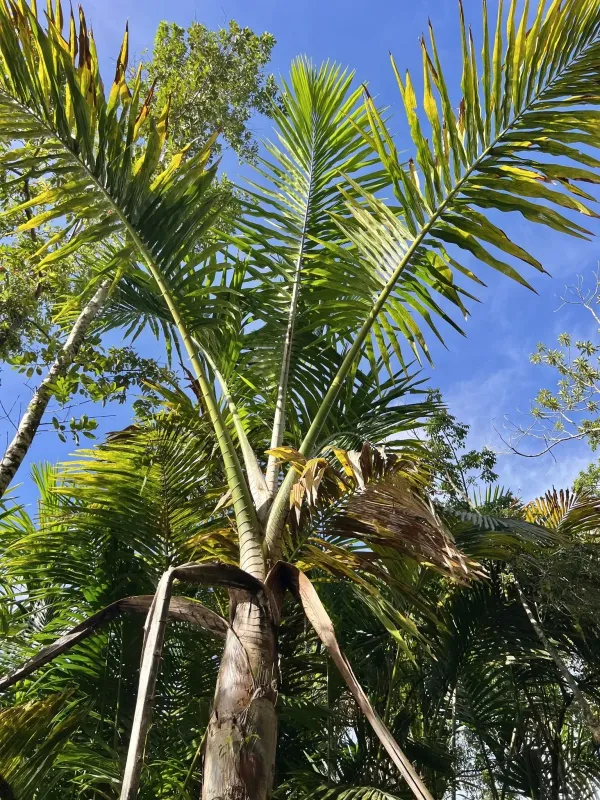
Description
Sowing dates
Propagation of Metroxylon salomonense is primarily achieved through fresh seeds. Because the seeds lose viability very quickly, they must be sown immediately after collection to ensure high germination rates.
The ideal germination medium is a lightweight, well-draining soil mix that retains moisture. A warm, humid environment is critical, with temperatures consistently maintained between 25 and 30 degrees Celsius.
Seedlings require partial shade during their early growth stages to protect them from intense direct sunlight. As they mature, they become more tolerant, but consistent moisture remains a priority.
Transplanting to the permanent site should be carried out carefully to avoid damaging the extensive root system. Ensuring correct spacing, typically 6 to 8 meters apart, allows for healthy crown development.
As a monocarpic plant, the growth cycle is terminal; therefore, new plantings should be staggered to ensure continuous production over the years within a managed plantation system.
Growing requirements
Metroxylon salomonense belongs to the Arecaceae family and is native to the humid tropical forests of the Solomon Islands. It thrives in high-temperature environments with minimal seasonal variation.
This palm prefers deep, fertile, and swampy or waterlogged soils. It is naturally adapted to river valleys and coastal lowlands where water is abundant throughout the year.
High relative humidity is essential for the palm's vigor. It cannot withstand prolonged drought conditions, which can lead to stunted growth and increased susceptibility to pests and diseases.
While the palm can tolerate some shade, maximum biomass production occurs in areas with full sun exposure, provided that water availability remains sufficient to meet transpiration needs.
Maintaining a layer of organic mulch around the base of the plant helps regulate soil temperature and retain moisture, simulating the natural forest floor conditions to which the palm is adapted.
Yield
The economic value of Metroxylon salomonense lies in its central trunk, which acts as a storage organ for starch. The primary yield is the raw sago flour extracted from the pith of the stem.
A single mature palm can yield several hundred kilograms of starch. The starch content peaks just before the plant initiates its single flowering and fruiting cycle before dying.
Productivity is managed by timing the harvest perfectly. Harvesting too early results in lower yields, while harvesting too late leads to the conversion of stored starch into energy for the reproductive phase.
Traditional extraction involves physical processing: chopping the trunk, shredding the pith, and washing the starch through a sieve into sedimentation tanks where it settles and is dried.
The palm is considered a versatile resource; beyond food starch, the foliage is highly valued for thatching roofs, and the vascular fibers are used for handicrafts and construction.
Main diseases and pests
The most significant threat to Metroxylon salomonense plantations are palm weevils. These insects bore into the trunk and crown, severely damaging the soft tissues and potentially killing the tree.
Fungal infections can occur in damp environments, particularly if the trunk is damaged. Ensuring good ventilation between trees and regular sanitary inspections can help minimize these risks.
Rodents pose a threat to young seedlings and saplings by feeding on tender shoots. Effective rodent control is necessary during the establishment phase of a new plantation.
Environmental stress, such as extreme flooding beyond the plant's tolerance or prolonged droughts, can weaken the palm's natural defenses against pathogens and pest attacks.
Standard management includes removing and destroying heavily infested trees to prevent the spread of pests and diseases to healthy palms within the plantation area.
Harvesting
Harvesting is a terminal event for the individual palm. The trunk is felled exactly when the tree reaches maturity, typically identified by the emergence of the inflorescence.
The process starts with clearing the leaves and bark to expose the starch-rich pith. Manual labor remains the most effective way to process the fibrous material for large-scale extraction.
Efficiency in harvesting depends on logistics, ensuring that the heavy trunks are transported to a processing site before fermentation or quality degradation of the starch occurs.
The extraction process is water-intensive, requiring access to clean running water to wash the starch from the shredded plant material and separate it from the woody fibers.
Consistent harvest cycles ensure a steady supply of sago, making this palm a pillar of regional food security and a fundamental component of the local agro-ecosystem.