
Mauritia vinifera
Mauritia vinifera
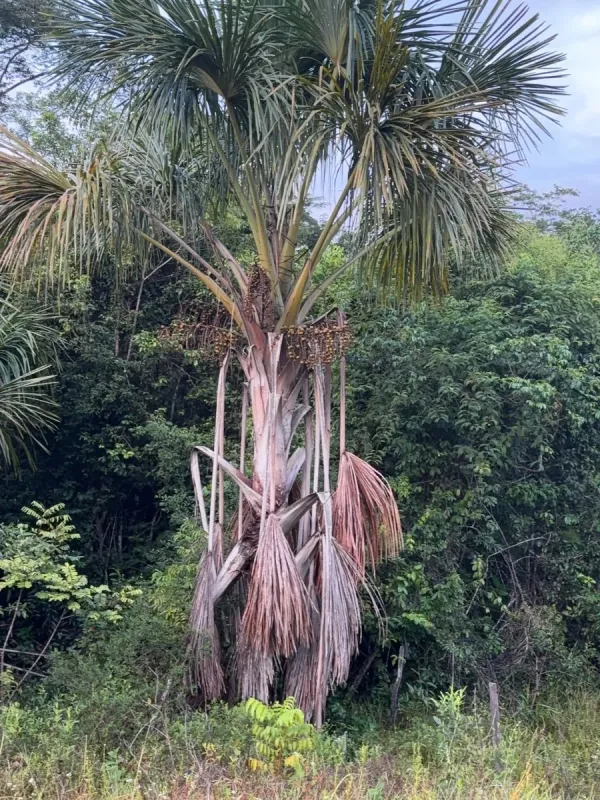
Description
Sowing dates
Propagation of this culture in natural conditions and under controlled cultivation is carried out primarily by seeds. Freshly harvested seeds have a relatively short viability period, so sowing is recommended immediately after separating the fruits from the pulp.
For seed germination, well-drained substrates with high humidity and constant temperature, simulating a tropical climate, are used. The germination period can last from several months to a year, requiring patience and strict control of moisture levels.
Transplanting young seedlings to a permanent location is performed only after the plant has strengthened and formed a developed root system. It is important to minimize root damage, as the palm is extremely sensitive to transplanting and takes a long time to adapt to a new site.
In industrial scales, growing seedlings in specialized nurseries with shaded conditions is practiced. This allows for the selection of the most viable specimens for subsequent planting in forest or agricultural systems.
Planting density depends on the purpose of cultivation; fruit production requires more free space between trees. An optimal planting scheme promotes good crown insolation, which is critical for full future fruit-bearing.
Growing requirements
Mauritia vinifera is a palm of the Arecaceae family, native to the tropical regions of South America. It prefers humid, swampy areas, river floodplains, and territories with high groundwater levels, where other crops often fail to survive.
The plant is light-loving, therefore requiring open areas protected from dense forest, which can suppress the growth of young palms. Prolonged shading slows metabolism and reduces the rate of trunk formation.
Soils for this crop should be rich in organic matter but also have sufficient aeration, despite the moisture-loving nature of the species. The palm adapts well to acidic soils characteristic of tropical forests but tolerates salinization and pronounced drought poorly.
The optimal temperature range for development is between 24 and 30 degrees Celsius with high relative humidity. Sharp temperature fluctuations and frost are fatal to this species as it lacks mechanisms to protect itself from cold.
Agricultural practice includes maintaining a stable water balance of the plot. During periods of natural soil drying, additional irrigation is required to prevent stress in adult trees and loss of yield.
Yield
The fruit-bearing phase of Mauritia vinifera begins quite late, often 7–10 years after planting. The tree is capable of producing yields for many decades, making it a valuable long-term asset.
The fruits are drupes covered with a scaly shell of reddish-brown color. The yield of one adult tree can reach several hundred kilograms of fruit per year, depending on growing conditions and age.
The fruit pulp is rich in carotenoids, vitamins A and C, as well as fatty acids, which determines its high nutritional value. The harvest is collected manually because the fruits are very delicate and spoil quickly upon mechanical damage during falls.
The main direction of economic use is the production of nutritious oil and the consumption of fresh pulp. Also, drinks, jams, and desserts are made from the fruits, which are in high demand in local markets.
The economic efficiency of the culture increases with the introduction of deep processing technologies for raw materials at the collection site. This allows for significantly increasing the shelf life of the final product and improving production margins.
Main diseases and pests
The main danger to plantations is posed by insect pests, especially various species of weevils, whose larvae damage the growth point. This can lead to the death of the tree if protective measures are not taken in time.
Fungal diseases developing in conditions of high humidity often affect the root system and leaves. For prevention, it is necessary to ensure good ventilation of the plantings and avoid water stagnation around the trunk.
Improper harvesting with damage to the bark or palm tissues creates an entry point for pathogens. Any trauma to the trunk can provoke rot and a gradual depletion of the plant's life force.
Competition with aggressive weeds at a young age can significantly slow the palm's development. Regular weeding and mulching of the tree circles are mandatory maintenance elements in the first years of life.
Animals can also pose a threat by eating young leaves and damaging trunks. Installing protective fencing around young seedlings helps prevent biomass losses and ensures uniform crop growth.
Harvesting
Harvesting takes place during the biological maturity period when the fruits acquire a characteristic color and become soft to the touch. The collection process requires the use of specialized equipment or qualified workers.
Considering the height of adult trees, harvesters often use ladders or modern lifting mechanisms. The use of spikes to climb the trunk is not recommended as it damages the bark and lowers the tree's immunity.
Harvested fruits are sorted immediately after transport from the plantation. Quality fruits are sent for processing, while damaged or immature ones are discarded to minimize storage losses.
Transportation is carried out in perforated containers, ensuring air access and preventing premature spoilage of the harvest. It is important to deliver raw materials to the processing facility within 24 hours of collection.
Post-harvest processing includes cleaning from the outer scales and separating the pulp from the pit. This stage requires compliance with sanitary standards to exclude contamination of the final food product.