
Peach palm
Bactris gasipaes Kunth
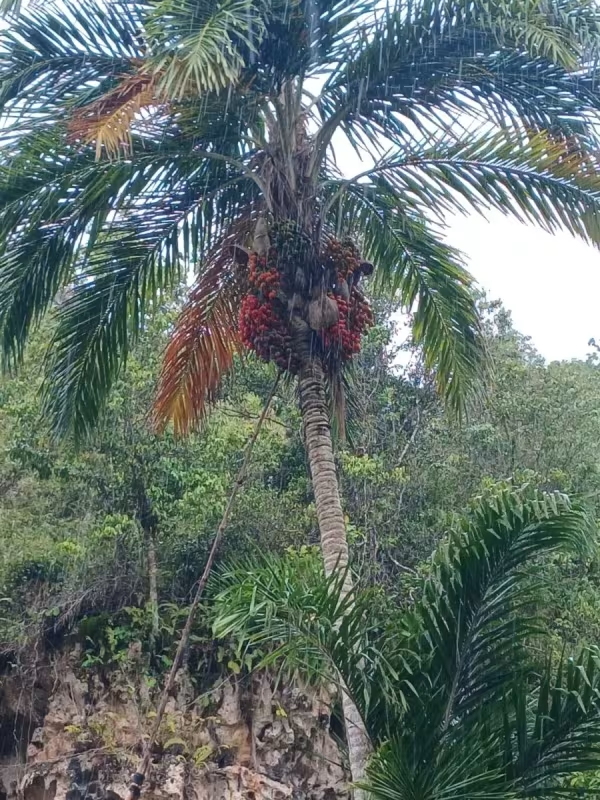
Description
Sowing dates
Bactris gasipaes is propagated primarily via seeds in nurseries. Seeds require high humidity and warm temperatures, ideally between 25 and 30 degrees Celsius, to ensure optimal germination rates.
The germination period can last from one to three months. Once the seedlings reach a height of approximately 30 to 50 centimeters, they are ready to be transplanted into the main field.
Planting usually coincides with the beginning of the rainy season to allow the root system to establish itself without extreme water stress. Proper spacing of 5–6 meters is essential for canopy development.
Young plants are sensitive to weed competition and require consistent clearing around the base during the first two to three years of growth to avoid stunted development.
In certain regions, vegetative propagation through the removal of suckers from mother plants is employed, which helps maintain the genetic integrity of specific high-yielding varieties.
Growing requirements
As a member of the Arecaceae family, the peach palm is native to the humid tropics of Central and South America. It thrives in regions with deep, well-drained, and nutrient-rich soils.
The crop requires a high annual rainfall, ideally between 2000 and 4000 mm, distributed throughout the year. It does not tolerate prolonged waterlogging of the root zone.
Temperature is a critical factor; the plant is strictly tropical and cannot survive freezing temperatures. A stable climate between 20 and 30 degrees Celsius is necessary for constant growth.
Full sun exposure is vital for the development of inflorescences and fruit production. Shaded environments generally lead to lower yields and higher susceptibility to fungal infections.
Regular fertilization with nitrogen, phosphorus, and potassium is required to support the high productivity of mature palms in intensive farming systems.
Yield
The peach palm is noted for its relatively early maturity, with most plantations starting to produce fruit between 3 and 5 years after planting.
Yields are highly variable depending on management practices and variety; professional plantations can expect between 10 and 25 tons of fruit per hectare annually.
The fruits are produced in large clusters that can weigh up to 10 kilograms. A healthy tree can produce multiple clusters per season under optimal growing conditions.
The species is also famous for the production of heart of palm (palmito), which is harvested by cutting the apical meristem of the plant.
Both the oil and the starchy flour derived from the fruit represent significant value-added products that drive the economic viability of this crop.
Main diseases and pests
The most devastating pests are various species of weevils, which bore into the stem and the apical meristem, often killing the palm.
Fungal diseases like leaf spot and anthracnose are common in humid conditions and can significantly reduce the photosynthetic capacity of the foliage.
Nematode infestations can occur in sandy or poorly managed soils, leading to root system decay and reduced overall plant vigor.
Integrated pest management, including the removal of infested trees and the use of biological controls, is essential for maintaining plantation health.
- Palm weevil (Rhynchophorus palmarum)
- Fusarium wilt
- Leaf spot (Phyllosticta)
- Root-knot nematodes
Harvesting
Harvesting is a labor-intensive process, primarily because of the spines found on the stems of many varieties, necessitating the use of specialized protective equipment.
Fruit maturity is indicated by a shift in color to orange, red, or yellow. Careful timing of the harvest is crucial to ensure peak nutritional quality and flavor.
Post-harvest handling is critical, as the fruit has a high respiration rate and is highly perishable in warm tropical climates, requiring rapid processing.
For the production of heart of palm, the trees are harvested when they reach specific developmental stages, requiring efficient logistics to process the stems immediately.
The harvested clusters are sorted by size and quality to meet market requirements, ensuring that damaged or immature fruits are excluded from the distribution chain.