
Hybrids of Agapanthus campanulatus and Agapanthus comptonii
hybrids between Agapanthus campanulatus F. M. Leight. and Agapanthus comptonii F. M. Leight.
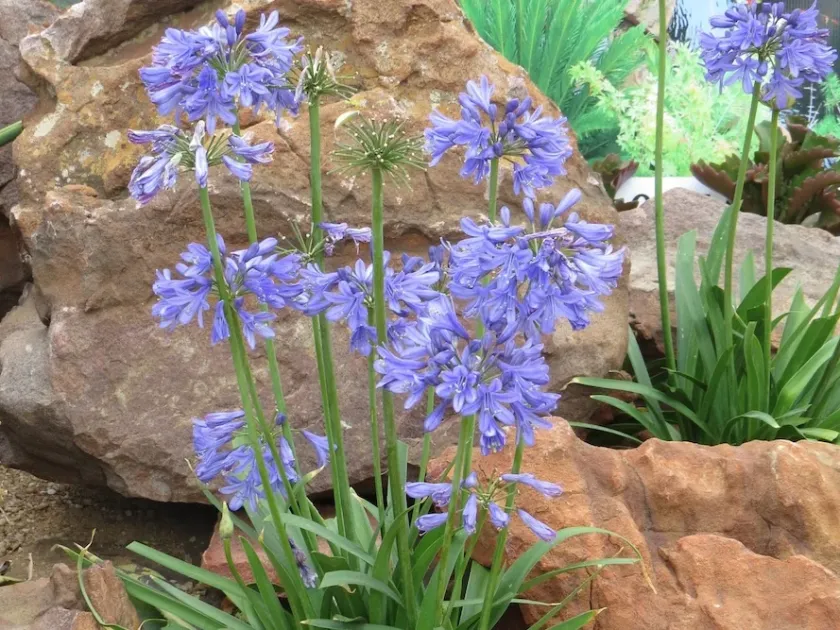
Description
Growing requirements
These ornamental hybrids belong to the Amaryllidaceae family and originate from the crossing of Agapanthus campanulatus and Agapanthus comptonii. They are perennial herbaceous plants characterized by strong, spreading root systems and elegant bell-shaped flowers.
The native habitat of the parent species is the mountainous terrain of South Africa, which explains their natural adaptation to cool, well-lit environments and their preference for distinctive seasonal growth cycles.
To cultivate these hybrids successfully, a well-draining, fertile soil medium is essential. The roots require good aeration; therefore, planting in waterlogged or heavy clay soil should be strictly avoided to prevent root decay.
These plants thrive in full sun, which promotes maximum flower production and strong stalks. In temperate climates, they often benefit from being grown in containers, allowing for easy relocation to protected areas during frost.
Maintenance includes consistent watering during the growing season and periodic application of balanced NPK fertilizers. Division of the rhizomes every three to four years helps maintain plant vigor and ensures consistent blooming.
Main diseases and pests
Common pests affecting these plants include spider mites and mealybugs, which tend to infest leaves during hot and dry spells. Regular misting and pest control treatments are effective measures for maintaining plant health.
Root rot caused by various soil-borne fungi is the most critical threat to the longevity of the plant. Ensuring the drainage is optimal and avoiding excessive overhead watering are the primary steps in disease management.
Slugs and snails can cause cosmetic and structural damage, particularly to younger leaves. Using physical barriers or copper tape around pots is recommended to prevent these mollusks from reaching the foliage.
Leaf spot diseases, often fungal or bacterial in origin, may appear during prolonged humid conditions. Removing affected leaves and ensuring good air circulation around the plants will limit the spread of infection.
Viruses, although less common, can cause stunted growth or distorted flower stems. Since there is no cure, rigorous sanitation and control of insect vectors like aphids are vital to protect the collection.