
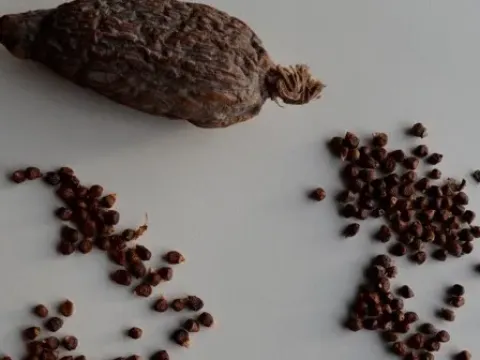
Aframomum sceptrum
Aframomum sceptrum
Aframomum sceptrum is a perennial herbaceous plant belonging to the Zingiberaceae family. Native to the humid rainforests of Central and West Africa, it thrives in shaded and nutrient-rich environments typical of its natural forest habitat.
What the section contains
Aframomum sceptrum
The plant requires high humidity levels and constant tropical temperatures to grow efficiently. It is best suited for cultivation under a canopy or in shaded nursery conditions, as intense direct sunlight can significantly damage its foliage.
Regarding soil requirements, this crop favors well-draining, organic-rich substrates. It is essential to maintain consistent soil moisture, but the physical structure of the soil must allow excess water to drain to prevent rhizome decay.
Agricultural management involves careful selection of planting sites that mimic the forest floor. Cultivators typically propagate the plant via rhizome division, ensuring that each segment has healthy buds to promote vigorous regrowth after transplanting.
The main economic value of Aframomum sceptrum lies in its fruits and seeds, which are harvested for their aromatic properties. These seeds are a traditional source of spice in various regional cuisines and are also utilized in local ethnomedicine.
Fungal diseases related to root and rhizome rot are the most significant threats to Aframomum sceptrum. These issues primarily occur when drainage is inadequate or during prolonged periods of waterlogging in the soil.
Pests such as soil nematodes pose a substantial risk to the crop's yield by damaging the root system. Additionally, leaf-eating insects can cause significant damage to the plant's photosynthetic apparatus during the active growing season.
Integrated pest management strategies are crucial for sustainable production. Growers are encouraged to use certified disease-free rhizomes and practice proper field sanitation to minimize the risk of spreading pathogens between crop cycles.
Maintaining adequate plant spacing is essential for air circulation. Proper spacing not only helps in managing the microclimate within the plantation but also reduces the incidence of fungal spores settling on leaves and stems.
Monitoring programs are recommended to detect any early signs of infestation. Prompt removal and destruction of affected plant parts are standard practices to keep the plantation healthy and ensure high-quality spice output.