
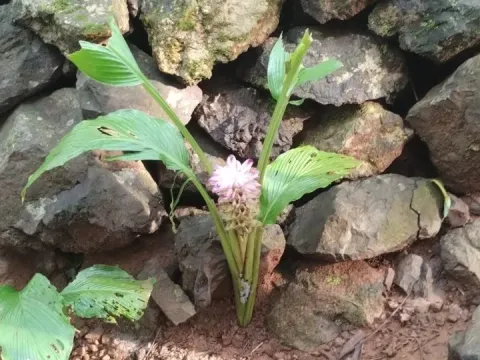
Aromatic turmeric
Curcuma aromatica
The planting of Curcuma aromatica is traditionally conducted during the spring season once the soil has sufficiently warmed and the risk of frost has passed. The optimal time for planting rhizomes coincides with the onset of the monsoon season, providing plants with the necessary natural humidity for robust growth.
What the section contains
Aromatic turmeric
For propagation, healthy portions of rhizomes with well-developed buds or 'eyes' are selected. It is essential that the planting material undergoes pre-treatment or disinfection to prevent fungal infections during the early stages of the growth cycle.
Rhizomes are planted in prepared trenches or pits at a depth of 5 to 10 centimeters. A spacing of at least 30–40 centimeters between individual plants within rows is required to ensure the proper development of the branching underground system.
In large-scale commercial operations, soil mulching is commonly applied immediately after planting. This practice helps maintain a stable soil temperature and prevents moisture evaporation, which is critical for successful germination in the first few weeks.
When grown in greenhouse environments or containers, planting schedules can be adjusted if supplemental heat and stable lighting are provided. Under these controlled conditions, the vegetative cycle can be managed to achieve early harvesting.
Aromatic turmeric belongs to the Zingiberaceae family and is a tropical plant that demands specific temperature conditions. For successful cultivation, an air temperature range between 20 and 35 degrees Celsius is considered optimal.
The plant prefers well-lit areas; however, in regions with intense solar radiation, it requires partial shading. Direct, harsh sunlight can lead to leaf scorch, which is why the crop is frequently integrated into agroforestry systems.
Soils intended for turmeric cultivation must be loose, rich in organic matter, and possess excellent drainage characteristics. Waterlogging in the root zone is detrimental, making it vital to avoid low-lying areas with heavy clay soil compositions.
The ideal soil pH for this species ranges from 5.5 to 6.5. A high humus content facilitates the rapid formation of massive rhizomes, which constitute the primary commercial product for this agricultural crop.
During the active vegetative growth phase, the plant requires moderate but consistent irrigation. Water deficiency during the development of vegetative mass results in lower total yields and significantly slows the expansion of the root system.
The yield of Curcuma aromatica depends on climatic factors, the quality of the planting material, and adherence to agronomic standards. With favorable moisture regimes, average harvest yields can reach 15–25 metric tons of rhizomes per hectare.
A biological characteristic of this species is its slow accumulation of biomass, meaning the primary rhizome expansion occurs in the second half of the vegetation cycle. Nitrogen-based fertilization in early stages supports foliage growth, while potassium during the flowering phase stimulates root enlargement.
To maximize marketable yield, it is necessary to use localized cultivars known for their high growth vigor. Industrial plantations require annual organic fertilization to maintain soil fertility and provide essential macro and micronutrients.
Timely weeding is an important factor affecting final harvest outcomes. Turmeric's root system competes poorly with weeds, which consume available nutrients and moisture, significantly reducing the final biomass of the product.
In intensive farming conditions, the use of drip irrigation can increase yields by 20–30%. Controlled delivery of water and fertilizers ensures uniform growth and the formation of large, high-quality rhizomes.
The primary threats to Curcuma aromatica are root rot diseases caused by pathogenic fungi such as Pythium and Fusarium. These diseases develop under conditions of excessive moisture and poor drainage, directly attacking the plant's underground structures.
Leaf spot diseases caused by various fungal infections are common during prolonged rainy periods. These appear as brown or yellow spots on the foliage, eventually leading to premature desiccation and reduced photosynthetic activity.
Among pests, root-knot nematodes and root mealybugs cause the most significant damage. These parasites injure the root system, creating entry points for secondary bacterial infections that can potentially devastate an entire plantation.
Effective management requires an integrated approach: using healthy propagation material, implementing crop rotation, and maintaining optimal plant density. Re-cultivation on the same field more than once every three years is not recommended.
Upon detection of infection hotspots, immediate removal and destruction of affected plants are necessary. The use of biological fungicides based on Trichoderma has proven highly effective in preventing most soil-borne diseases associated with this crop.
Harvesting begins 7 to 9 months after planting, once the aerial parts of the plant begin to yellow and wither. This natural phenomenon serves as an indicator that the accumulation of essential oils and starches in the rhizomes has reached its peak.
Rhizomes are carefully excavated either by hand or using mechanical potato harvesters, with care taken to minimize mechanical injury. Damaged pieces are prone to rapid spoilage during storage and require immediate processing.
After excavation, the rhizomes are cleaned of soil, washed, and separated from fine lateral roots. Primary processing often includes brief boiling or steaming, which accelerates the drying process while preserving the color and aroma of the product.
Drying is performed in natural conditions under shelters or in specialized drying chambers at temperatures not exceeding 50–60 degrees Celsius. Overheating can lead to the loss of the valuable aromatic components for which this species is prized.
The final product is sorted, processed into powder, or stored as whole dried rhizomes. Under proper conditions—low humidity and darkness—the commercial quality of the turmeric can be maintained for extended periods without significant degradation.