
Australian turmeric
Curcuma australasica
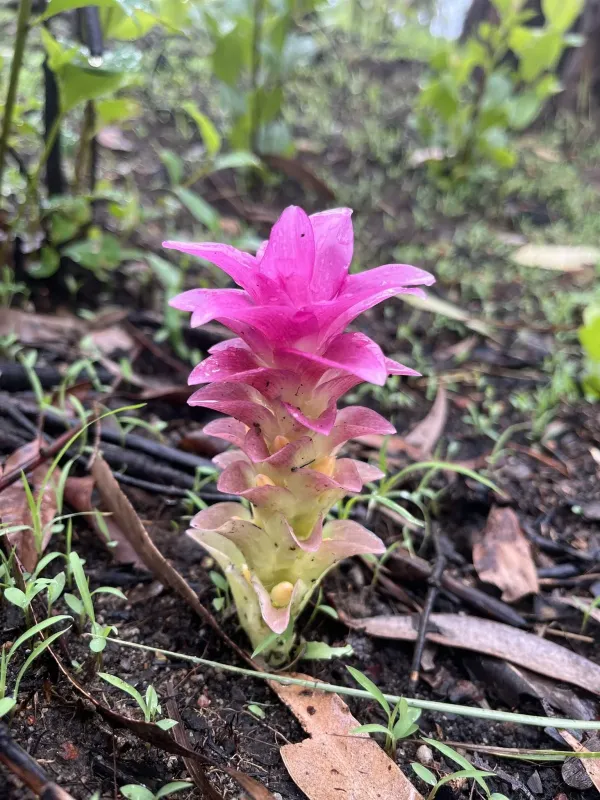
Description
Growing requirements
Australian turmeric (Curcuma australasica) belongs to the Zingiberaceae family. It is a perennial herbaceous plant native to the tropical regions of Northern Australia, thriving in warm and humid environments.
Botanically, it is characterized by its rhizomatous root system and vibrant, long-lasting floral bracts. The plant typically undergoes a period of dormancy during the cooler, drier months of the year.
To cultivate this plant successfully, one must provide bright but indirect light. Direct sunlight can scorch the foliage, while deep shade will result in spindly growth and a lack of flowers.
Soil requirements include a rich, well-draining potting mix that retains moisture without becoming waterlogged. Regular hydration is essential, specifically during the growth phase when the plant is pushing up new shoots.
In terms of economic use, this species is primarily valued in the horticultural trade as an exotic ornamental. Its aesthetic appeal makes it a popular choice for botanical collections and interior landscaping.
Main diseases and pests
Root rot is the most common threat to Curcuma australasica, typically caused by overly heavy soil or excessive watering. Ensuring excellent drainage is the primary defense against this condition.
Spider mites represent a major pest risk in indoor or greenhouse settings. These tiny arthropods thrive in dry, stagnant air, emphasizing the need for regular misting and airflow.
Mealybugs can often be found in the tight spaces between leaf sheaths. Careful manual removal or the use of neem oil treatments is usually sufficient to manage minor infestations.
Fungal leaf spots can occur when the humidity levels are high but ventilation is poor. Ensuring adequate air circulation prevents spores from settling on the foliage.
Nutrient toxicity, caused by over-fertilization, can manifest as brown edges on the leaves. It is recommended to use diluted fertilizers to avoid damaging the delicate root hairs.