
Beaked yucca
Yucca rostrata Engelm. ex Trel.
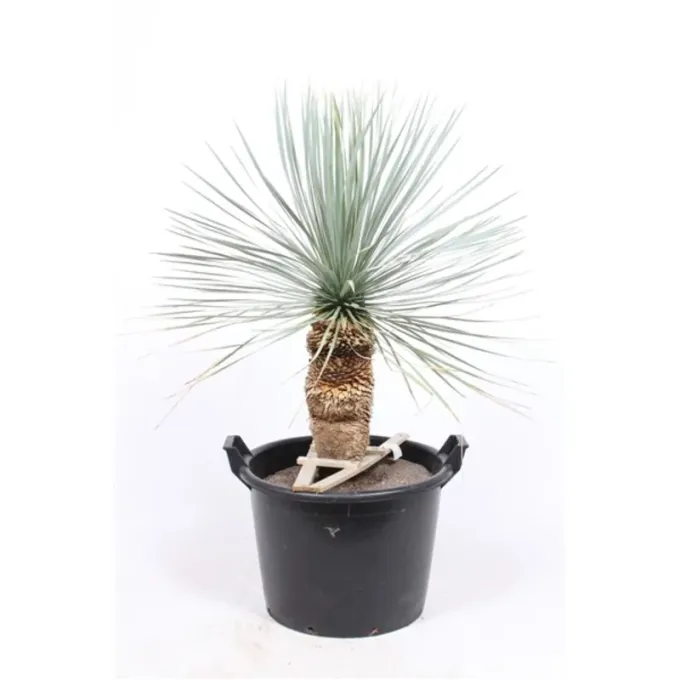
Description
Sowing dates
Propagation of the Beaked yucca is primarily conducted through seeds, which should be planted in well-draining, sandy-based propagation trays.
To ensure high germination rates, seeds benefit from soaking for 24 hours before being sown at a depth of about 1 cm in warm, bright conditions.
Seedlings require significant amounts of light immediately upon emergence to prevent etiolation and to ensure the development of a strong root system.
The transition to the field should only occur after the risk of frost has passed, as young plants are more sensitive to cold than mature specimens.
Vegetative propagation using offsets is possible but requires careful separation from the parent plant and a healing period to prevent fungal infection.
Growing requirements
Yucca rostrata belongs to the Asparagaceae family and is native to the Chihuahuan Desert, reflecting its adaptation to arid and semi-arid environments.
This species is highly prized for its architectural form and its ability to withstand intense heat and direct sunlight throughout the year.
Soil requirements are straightforward: the medium must have excellent drainage, as the species is adapted to rocky or sandy soils that do not retain moisture.
Climatic requirements involve dry, cool winters and hot, sunny summers; the plant is known for being hardier than many other desert-dwelling yuccas.
Watering should be kept to a minimum, ensuring the substrate dries completely, especially during the dormant season to avoid root system degradation.
Main diseases and pests
The most significant threat to Yucca rostrata health is fungal root rot, which typically stems from poor soil drainage or excessive irrigation.
Pests such as scale insects and mealybugs can colonize the base of the leaves, drawing sap and weakening the plant's structural integrity.
Spider mites may become a localized issue if the plant is grown in environments with poor air circulation or excessively low humidity.
Leaf spot diseases, caused by various pathogens, can occur if the foliage is kept moist for prolonged periods due to poor landscape hygiene.
Preventative care involves ensuring adequate space between plantings and immediate removal of any yellowing or decaying lower foliage.