
Whipple's yucca
Yucca whipplei Torr.
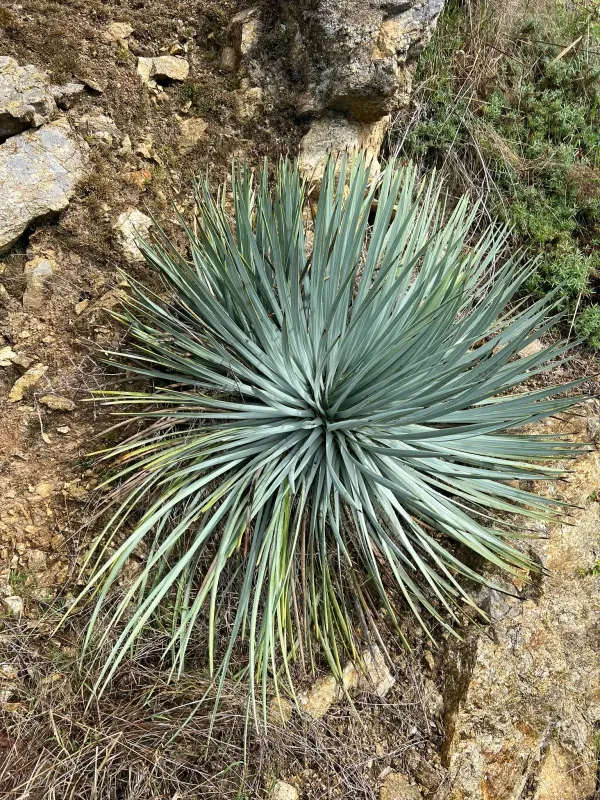
Description
Sowing dates
Propagation of Whipple's yucca in agricultural or horticultural settings is primarily achieved through seeds. Sowing is typically performed during the spring season when soil temperatures stabilize between 20 and 25 degrees Celsius.
For successful germination, seeds require a pre-sowing stratification period of 30 days under cool temperatures. This process simulates natural dormancy conditions and significantly increases the germination rate.
Seeds are sown in a light, well-draining substrate consisting of sand, perlite, and topsoil. The planting depth should not exceed 1 centimeter, as the seeds require sufficient light exposure to facilitate proper development.
Initial seedlings emerge within 2 to 4 weeks after planting, provided that consistent moderate soil moisture is maintained. During early stages, seedlings must be protected from direct sunlight and excessive watering.
Once the plant reaches the 3–4 true leaf stage, young specimens are transplanted into individual containers. Transfer to open ground is advisable only after the danger of late frost has passed and the plants are fully acclimated.
Growing requirements
Whipple's yucca belongs to the Asparagaceae family and is a monocarpic plant, meaning the leaf rosette dies after the flowering cycle is complete. The species is native to the arid regions of Southern California and Mexico.
The plant has high requirements for insolation and thrives in open areas with direct solar exposure. A lack of light leads to elongated foliage and a significant decrease in the plant's ornamental quality.
Soil conditions must mirror natural desert habitats: rocky or sandy substrates with excellent drainage are ideal. Water stagnation in the root zone is a critical factor that causes rapid decay and death of the plant.
The crop is highly drought-tolerant; however, during active growth phases, it requires regular yet measured irrigation. In the winter, irrigation should be minimized to allow for a necessary period of dormancy.
The temperature regime should remain stable, avoiding sharp fluctuations during the flowering stage. Whipple's yucca can withstand brief temperature drops but is sensitive to high air humidity combined with cold.
Main diseases and pests
The primary threat to this crop involves fungal diseases of the root system resulting from improper watering practices. Excess moisture creates an environment that triggers root and stem rot infections.
Pests, such as mealybugs and spider mites, can damage leaf blades during hot and dry weather conditions. Detection of these pests necessitates the use of targeted insecticides and acaricides to prevent further infestation.
Aphid damage is also possible, particularly during the budding phase when they aggregate on the flower stalks. Proactive monitoring and preventive treatments are essential to contain outbreaks at an early stage.
It is important to monitor the leaf axils, where moisture can accumulate or pests can establish colonies. Regular sanitary maintenance to remove dead tissue reduces the risk of pathogen development.
The root system is also vulnerable to wireworms and white grubs when planted in uncultivated soil. Soil disinfection before planting or treating the root zone is recommended to mitigate these underground threats.
Harvesting
The economic use of Whipple's yucca is primarily focused on ornamental gardening and xeriscaping. The plant's flower stalks can reach heights of up to 3 meters, serving as a striking focal point in landscape design.
Seed harvesting is conducted after the flowering cycle concludes and the seed pods have fully matured. The pods turn brown and dry, indicating that the seeds are ready for collection and storage.
If utilizing yucca fibers for technical purposes, leaves are harvested prior to the onset of the flowering stage. The plant contains strong fibers historically used by indigenous populations for rope and textile production.
Disposal of the spent rosettes after flowering is performed mechanically. As a monocarpic species, the entire above-ground structure should be removed unless seed collection is the primary objective.
Harvesting processes require caution due to the sharp, spine-tipped leaves. The use of heavy-duty gloves and protective tools is mandatory to prevent injury to personnel during handling and extraction.