
Giant yucca
Yucca guatemalensis Baker
Description
Growing requirements
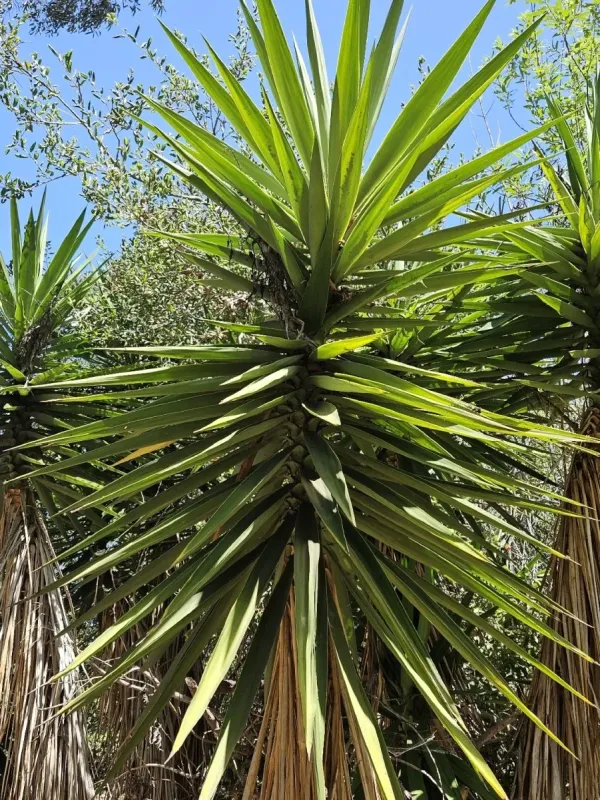
The Giant yucca (Yucca guatemalensis), belonging to the Asparagaceae family, is a perennial evergreen plant widely distributed throughout Central America. It is characterized by a massive trunk and long, rigid, sword-shaped leaves that grow in dense rosettes.
This crop thrives in well-drained, sandy or loamy soils. It is highly adaptable to various soil types but exhibits poor tolerance to waterlogged conditions, which can lead to rapid decay of the root system and plant death.
Regarding climate, the species prefers tropical to subtropical conditions. It requires consistent exposure to direct sunlight to ensure optimal growth and structural integrity of its fibers, as low light leads to weakened, spindly leaf growth.
Agrotechnical practices involve careful irrigation management. Although the plant is renowned for its drought tolerance, regular watering during the peak growing season enhances biomass production and maintains overall plant vitality.
Propagation is most effective through vegetative cuttings. Using stem segments or offsets allows for the establishment of uniform plantations, which is crucial for large-scale agricultural projects aiming for fiber production.
Yield
The Giant yucca is primarily valued for its fibrous leaves. The extracted fibers are durable and resistant to environmental degradation, making them suitable for manufacturing ropes, twines, and specialized textiles.
In addition to industrial fiber, the plant serves as a food crop. In its native range, the edible flower buds are harvested and prepared in various culinary dishes, contributing to local food security and agricultural revenue.
Economic yields are stable due to the plant's perennial nature. Well-managed fields can produce harvests for many years, as the species regenerates leaf growth efficiently after selective harvesting.
The quality of the final product depends heavily on post-harvest processing, including thorough fiber cleaning and drying. Properly treated fibers retain their mechanical strength, meeting the demands of various industrial sectors.
Beyond agricultural uses, mature specimens are highly sought after in the nursery trade for interior and exterior landscaping, providing an additional consistent stream of income for specialized growers.
Main diseases and pests
The most common agricultural pests affecting Giant yucca include mealybugs and scale insects. These parasites attach to the foliage, sucking vital sap and often leading to yellowing or stunted plant development.
Fungal pathogens pose a significant threat, especially during periods of high humidity or poor field drainage. Root rot is the most dangerous condition, as it typically affects the base of the trunk and can destroy an entire stand if not addressed.
Leaf spot diseases, caused by various fungi, can impact the visual and structural quality of the foliage. These infections are often exacerbated by crowded planting patterns that restrict airflow between the plants.
Effective management strategies include integrated pest control, ensuring proper spacing between plants, and applying fungicides only when environmental conditions favor disease outbreaks.
Maintaining high hygiene standards in the field, including the removal and destruction of infected tissue, is essential to prevent the spread of diseases and maintain the health of the entire crop cycle.