
Moundlily yucca
Yucca gloriosa L.
Description
Growing requirements
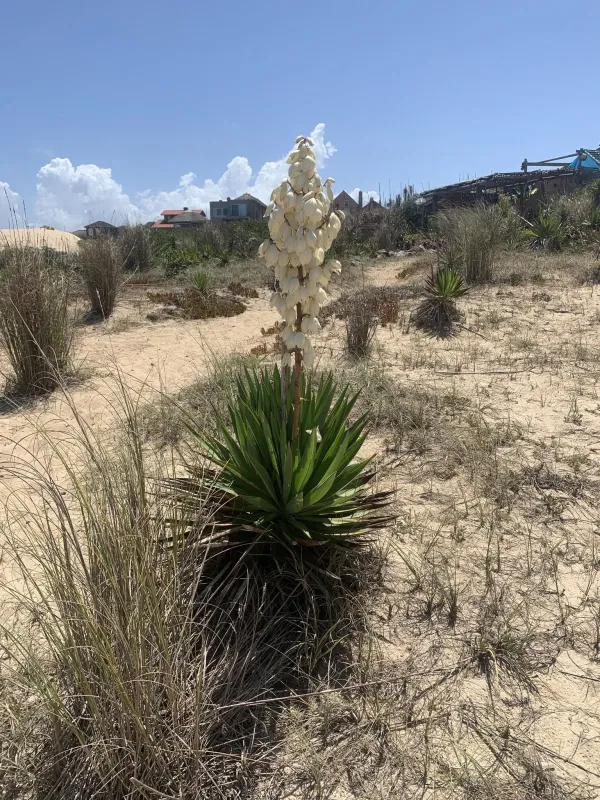
Moundlily yucca (Yucca gloriosa L.) is a robust, perennial evergreen shrub belonging to the Asparagaceae family. It is characterized by its sword-shaped, stiff leaves and a woody stem that can develop into a tall, prominent structure over several years of growth.
Originating from the southeastern United States, this species is well-adapted to coastal environments and sandy soils. It is recognized as an important industrial crop for regions where high-yield cereal crops struggle due to poor soil fertility.
Successful cultivation requires full sun exposure and excellent soil drainage. The plant thrives in sandy or rocky substrates where water does not pool, as excess moisture in the root zone is one of the primary causes of agricultural failure for this species.
In terms of climate, Yucca gloriosa demonstrates high resilience to drought conditions. It can withstand significant heat and moderate frost, making it a versatile candidate for cultivation in various temperate and subtropical zones.
Agronomic management should prioritize low-impact practices, including light weeding and soil aeration. Because the plant grows slowly, it is essential to manage the plantation density carefully to minimize competition for nutrients during the initial establishment phase.
Yield
The primary agricultural output of Yucca gloriosa is its high-quality, durable fiber. Traditionally extracted from the leaves, this fiber has been used in cordage, textiles, and various composite material manufacturing processes due to its tensile strength.
Beyond fiber, the plant is valued for its secondary metabolites, specifically steroidal saponins. These chemical compounds are harvested for the pharmaceutical industry to be used in the synthesis of specialized hormone-based medications.
The harvest cycle for fiber production is typically long-term, requiring careful planning for sustainable plantation rotation. When managed correctly, a mature stand can provide consistent yields of biomass over many years with minimal inputs.
Recent interest in sustainable materials has renewed focus on Yucca as a renewable source for bioplastics and packaging materials. This potential adds significant economic value to the cultivation of the plant in arid regions.
Economic yield is maximized when leaves are harvested at the peak of their physiological maturity. Proper post-harvest processing, including fiber extraction and drying, is critical to maintaining the quality required for industrial applications.
Main diseases and pests
Plantation health is primarily challenged by fungal pathogens that thrive in humid environments. Leaf spot diseases are common when plants are overcrowded or subjected to poor air circulation, necessitating strict spacing protocols.
Pest management focuses largely on sucking insects such as mealybugs and scale insects. These parasites drain plant vigor and produce honeydew, which serves as a substrate for sooty mold growth, potentially degrading the quality of the fiber.
Biological and chemical control measures should be integrated into the management plan to effectively mitigate pest populations. Monitoring for signs of infestation is essential during the warm months when insect life cycles are most active.
Root rot, often caused by poor drainage and excessive irrigation, is a critical threat that can decimate a plantation. Establishing a proper drainage system is the most effective preventative measure against this subterranean threat.
Regular sanitation, including the removal of dead or decaying lower leaves, helps to maintain an unfavorable environment for pests and pathogens. Keeping the plantation area clean and well-ventilated is key to long-term crop productivity.