
Adam's needle
Yucca filamentosa L.
Description
Growing requirements
Adam's needle (Yucca filamentosa) is a perennial evergreen shrub belonging to the Asparagaceae family, native to the southeastern United States. It is recognized for its architectural beauty and resilience in varied environmental conditions.
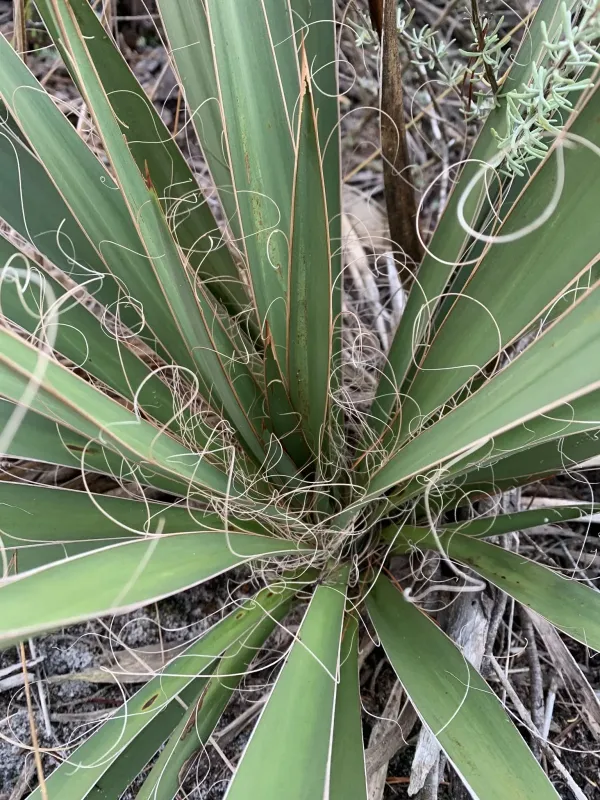
Botanically, the plant features a basal rosette of sword-shaped leaves with characteristic peeling filaments along the margins. During its blooming phase, it produces a tall panicle bearing large, bell-shaped creamy-white flowers.
This crop thrives in full sun, which is essential for maintaining plant vigor and ensuring prolific flowering. While it is quite adaptable, poor lighting usually results in stunted growth and the absence of flower stalks.
The ideal soil for this species is well-drained, sandy, or gritty, mimicking its natural habitat. It is highly tolerant of drought but extremely sensitive to waterlogged conditions, which often cause terminal root rot.
Beyond its ornamental appeal, Yucca filamentosa has historically been valued for its strong leaf fibers. Today, it remains a staple in xeriscaping and sustainable landscaping due to its low water requirements and minimal maintenance needs.
Main diseases and pests
Root rot is the most significant health threat to Yucca filamentosa, usually triggered by poor soil drainage and excess soil moisture during winter months. Prevention centers on selecting an elevated site for planting.
Scale insects are common pests that attach to the leaves, draining sap and leaving behind sticky residue. Infestations should be managed with systemic insecticides or physical removal if detected early.
Spider mites are frequently encountered during hot and dry spells. These pests cause chlorotic spots on foliage; they can be suppressed by maintaining proper humidity or applying appropriate acaricides when necessary.
Fungal leaf spots can occur if the plant is grown in areas with poor air circulation or consistently wet foliage. Regular maintenance pruning of dead leaves helps to reduce the spread of spores and improves overall plant hygiene.
Strategic management of pests involves monitoring for early signs of infestation and ensuring the plant remains healthy through proper soil aeration. Avoiding excessive fertilization helps maintain the plant's natural resistance.