
Linear-leaf yucca
Yucca linearifolia Clary
Description
Growing requirements
The linear-leaf yucca (Yucca linearifolia) is a distinctive perennial succulent belonging to the Asparagaceae family. Endemic to the arid, high-elevation landscapes of Coahuila, Mexico, this plant is highly prized in modern agriculture for its resilience and unique aesthetic profile.
The species thrives in full sun and requires exceptionally well-draining, rocky, or sandy soil compositions. Proper drainage is the most critical agronomic factor for this culture, as standing water and poorly aerated soils are the primary causes of physiological failure and root decay.
Regarding climate adaptation, this yucca demonstrates remarkable hardiness. It is specifically evolved to withstand intense daily temperature fluctuations and seasonal cycles of drought, which stimulate its slow, steady growth pattern.
Agronomic management involves minimal watering schedules, focusing on infrequent, deep irrigation during the active growth phase. Fertilization should be kept to a bare minimum, as excess nutrients encourage rapid, weak leaf growth that undermines the plant's characteristic structure.
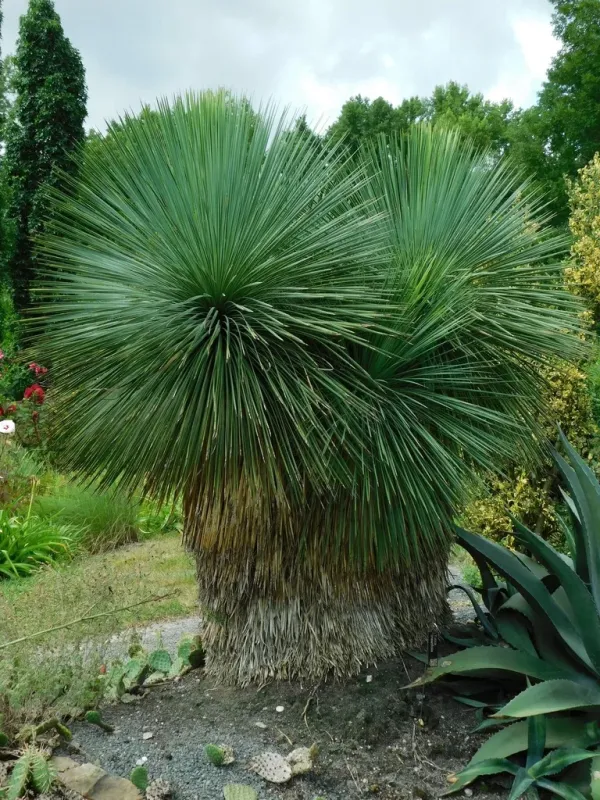
The primary horticultural application of Yucca linearifolia is in landscape design and xeriscaping. Its dense, globular form consisting of hundreds of slender leaves makes it an ideal specimen for drought-tolerant gardening, offering high visual impact with minimal maintenance.
Main diseases and pests
The most significant agronomic threats to this species are fungal infections resulting from high humidity and saturated soil conditions. Pathogens such as Phytophthora can quickly compromise the stem base if air circulation is inadequate or soil moisture levels are too high.
Insect pests, particularly scale insects, present a recurring challenge in cultivation. These pests colonize the narrow leaves and feed on the plant's sap, leading to stunted growth and secondary infections if the infestation is not addressed promptly.
Mealybugs are frequently observed in the leaf axils, protected by their white, waxy secretions. Given the plant's complex structure, controlling these pests requires systemic insecticides that ensure complete coverage and effective penetration into deep crevices.
Spider mites represent a common issue in dry, sheltered environments where natural predators are absent. Their feeding activities cause chlorosis and pitting of the leaf surfaces, which diminishes the plant's aesthetic value and photosynthetic efficiency.
Maintenance of plant health is best achieved through strict adherence to water management protocols and regular observation.
- Removing dead or necrotic lower foliage promotes better airflow.
- Monitoring the plant crown for signs of discoloration.
- Ensuring proper plant spacing to allow sunlight penetration to the base.