
Curveleaf Yucca
Yucca gloriosa L. var. recurvifolia (Salisb.) Engelm.
Description
Growing requirements
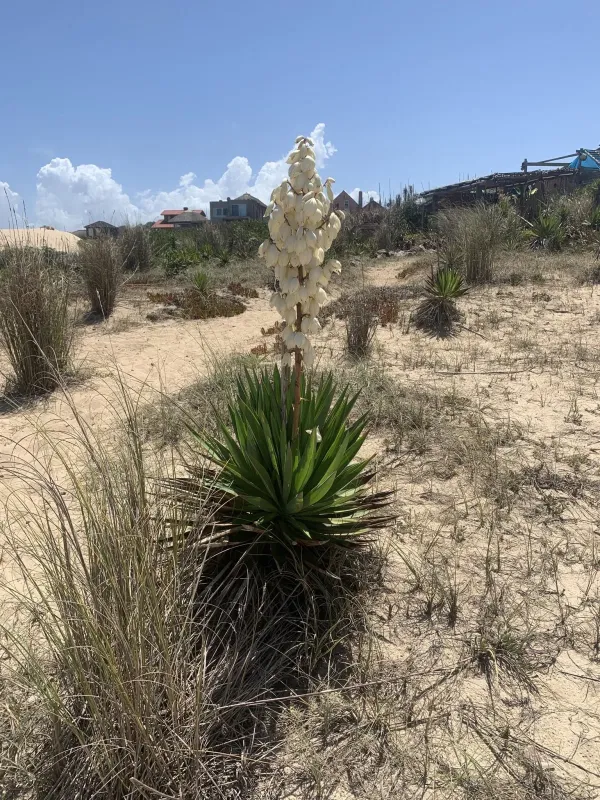
Curveleaf Yucca (Yucca gloriosa var. recurvifolia) is a striking evergreen perennial belonging to the Asparagaceae family. This specific variety is highly valued for its elegant, gracefully recurving leaves that offer a softer aesthetic compared to other Yucca species.
The plant is native to the coastal regions of the southeastern United States. It is naturally adapted to sandy, nutrient-poor soils and is remarkably tolerant of saline air, making it an excellent candidate for maritime and coastal landscape projects.
Cultural success depends primarily on providing excellent soil drainage. Curveleaf Yucca thrives in sandy or rocky substrates where water can drain away rapidly. Heavy clay soils must be heavily amended with grit to prevent fatal root rot.
This species requires full sun exposure to maintain its structural integrity and leaf color. While it is hardy in many temperate zones, it performs best when protected from harsh, desiccating winter winds, which can damage the foliage even if the roots remain intact.
Agricultural management is minimal, focusing on deep but infrequent watering during the first growing season. Once established, the plant becomes exceptionally drought-tolerant, requiring little to no supplemental irrigation or regular fertilization.
Main diseases and pests
The most significant threat to this crop is root rot caused by poor soil drainage and waterlogging. Symptoms often include a soft base and leaves that become chlorotic or limp, indicating that the vascular system is failing due to anaerobic conditions.
Scale insects and mealybugs are the primary pests that infest the leaf axils. These pests drain sap, causing stunted growth and providing entry points for sooty mold, which detracts significantly from the plant's ornamental value.
Leaf spot diseases, often caused by fungal pathogens like Cercospora, may appear during prolonged wet weather. Reducing humidity around the plant and ensuring proper air circulation are key cultural control methods.
Spider mites can be problematic during hot, dry summer months. They typically target the underside of the leaves, causing a stippled, yellowish appearance that eventually leads to leaf necrosis if left untreated.
Sanitation practices are essential for disease prevention. Removing dead leaves and debris from the base of the plant reduces the overwintering sites for both fungal spores and common insect pests.