
Rudbeckia occidentalis
Rudbeckia occidentalis Nutt.
Description
Sowing dates
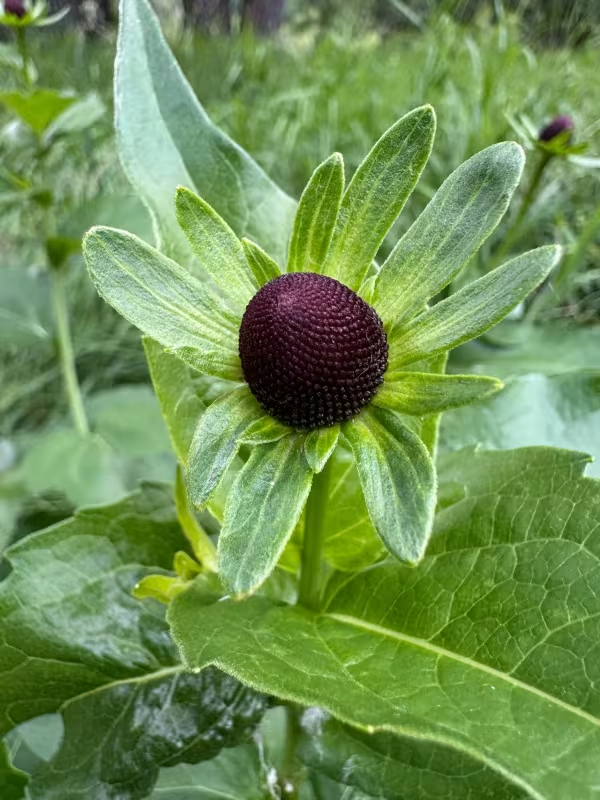
Rudbeckia occidentalis, commonly known as the Western Coneflower, is a perennial herb belonging to the Asteraceae family. This species is distinct due to its unique flower heads that lack the characteristic yellow ray florets, appearing instead as dark, prominent central cones, making it a highly desirable botanical specimen.
Seeds of the Western Coneflower should be sown in early spring or autumn to allow for natural stratification, which is essential for uniform germination. If sowing indoors, seeds should be pre-chilled in a moist medium for several weeks to break dormancy and ensure a high percentage of viable seedlings.
When starting in containers, use a light, well-draining seed-starting mix. Maintain a temperature range of 18–20 degrees Celsius. Keep the substrate consistently moist but avoid waterlogging, which is a common cause of damping-off disease in young seedlings during the initial development phases.
Seedlings should be pricked out into individual pots once they have developed at least two true leaves. This transplantation phase is crucial for developing a robust root system before the young plants are hardened off and moved to their permanent outdoor growing location after the last frost.
Proper spacing is vital for the health of the plants, typically requiring 40–50 centimeters between individual specimens. This spacing allows for adequate airflow, which is essential for minimizing humidity-related fungal issues and ensuring each plant has sufficient access to sunlight and nutrients.
Growing requirements
Western Coneflower thrives in full sun to partial shade, though it performs best with at least six hours of direct sunlight. While it is adaptable, providing a location protected from strong, prevailing winds will prevent the tall flower stalks from lodging or breaking during inclement weather.
The ideal soil for Rudbeckia occidentalis is fertile, well-draining, and rich in organic matter, with a neutral to slightly acidic pH. Heavy clay soils should be amended with compost or well-rotted manure to improve porosity and ensure that root systems do not suffer from moisture stagnation.
Adequate moisture is necessary throughout the growing season, especially during flowering stages. Regular irrigation, particularly during dry spells, is mandatory to support the rapid growth of the tall stems and the development of the distinct, cone-shaped floral structures characteristic of the species.
Fertilization with a balanced, slow-release fertilizer should occur twice: once during the active vegetative growth stage and again just as buds begin to form. Higher phosphorus and potassium levels are beneficial during the reproductive phase to enhance flower quality and stem strength.
Maintenance of the growing area through consistent weeding and soil cultivation is necessary to eliminate competition for water and nutrients. Keeping the ground around the base of the plants clear ensures healthy growth and significantly reduces the labor required for pest and disease control later on.
Main diseases and pests
Powdery mildew is a frequent challenge for Rudbeckia occidentalis, appearing as a white, dusty fungal growth on the leaves. To manage this, ensure proper plant spacing and airflow; if the disease persists, apply fungicides containing sulfur or systemic treatments to protect the foliage.
Root rot, often caused by waterlogged soil and poor drainage, is a significant threat to plant longevity. Prevention is centered on maintaining an optimal watering schedule and ensuring that the planting site has excellent drainage characteristics to prevent the accumulation of moisture near the crown.
Pests such as leaf-eating caterpillars and beetles can cause significant damage to the plant's aesthetic value. Regular monitoring is encouraged, and if infestation levels exceed acceptable thresholds, the application of appropriate contact or systemic insecticides is recommended to preserve the plants.
Aphids can also cluster on new growth, causing leaf curling and stunted flower development. They can usually be managed with gentle biological control methods or by washing the plants with insecticidal soap, which effectively reduces aphid numbers without negatively impacting the surrounding ecosystem.
To mitigate the risk of soil-borne pathogens, it is recommended to practice crop rotation, avoiding planting Rudbeckia where other members of the Asteraceae family were recently grown. This simple agronomic practice is effective in reducing the pressure from specific host-dependent diseases.