
Black-eyed Susan
Rudbeckia hirta L.
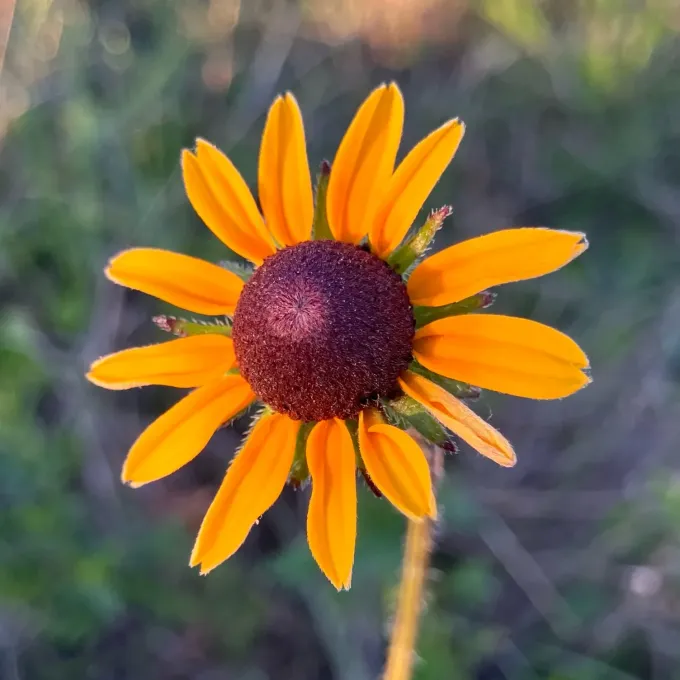
Description
Sowing dates
Black-eyed Susan (Rudbeckia hirta) belongs to the Asteraceae family and is commonly grown as an annual or biennial plant. Seeds are sown in open ground in April or May, once the soil has warmed sufficiently. For earlier blooming, starting seeds indoors in March is a highly effective method.
When starting indoors, seeds should be sown at a depth of no more than 0.5 cm, ensuring bright light and a temperature around 20–22 degrees Celsius. Seedlings should be pricked out at the two-leaf stage to encourage stronger root system development.
Transplanting hardened seedlings to their permanent location should be done after the risk of late spring frosts has passed. The optimal spacing between plants is 30–40 cm, allowing them to develop fully without competing for essential nutrients.
Biologically, the plant is characterized by high growth intensity once established. Consistent weeding and watering during the first few weeks after transplanting are critical for forming a resilient and stress-tolerant adult plant.
In commercial cultivation for cut flowers, planting is done in rows with spacing of up to 50 cm. This layout facilitates mechanical soil management and ensures adequate airflow to the root zone, reducing moisture-related issues.
Growing requirements
The crop prefers well-lit areas with fertile, well-drained soil. Although Rudbeckia is capable of growing in loams, it thrives best in sandy loam substrates with a neutral or slightly acidic pH balance.
Moisture requirements are moderate; while the plant possesses relative drought tolerance, it requires regular watering during the peak flowering phase. Excessive moisture stagnation is detrimental to the roots and may lead to crown or root rot.
To ensure steady growth, applying complex mineral fertilizers at the beginning of the growing season is recommended. A second application during the budding phase promotes the formation of larger flower heads and increases the overall duration of the bloom.
Black-eyed Susan is sensitive to strong winds, so wind protection is advisable for taller cultivars. The plant responds well to regular soil loosening, which enhances aeration of the root system and prevents soil compaction.
The optimal temperature range for development is 18–25 degrees Celsius. In temperate climates, the culture can withstand minor cooling, but prolonged rainfall and high humidity levels can negatively impact the plant's ornamental quality.
Main diseases and pests
The main pests affecting the crop include leaf nematodes and aphids. Infestations by nematodes lead to characteristic spotting on the leaves, requiring the immediate removal and destruction of infected plants to prevent spreading.
Among diseases, powdery mildew is the most frequent, manifesting as a white, dusty coating on leaf surfaces. Prevention involves avoiding excessive nitrogen fertilization and ensuring proper spacing between plants to maintain ventilation.
Outbreaks of Septoria leaf spot and rust can occur if crop rotation is neglected or if air circulation around the plants is poor. Fungicide treatments using copper-based products are effective in curbing fungal infection development in early stages.
Pest control measures include the use of systemic insecticides if aphid population thresholds are exceeded. It is essential to monitor the condition of the crops weekly throughout the entire vegetative period.
- Maintain proper planting distance to improve air circulation.
- Timely removal and disposal of infected plant debris.
- Use of mulch to suppress weeds and maintain overall soil health.
Harvesting
The economic use of Rudbeckia hirta is primarily focused on cut flowers for floral arrangements and landscaping. Harvesting of flower heads should be performed at the full-bloom stage to ensure maximum ornamental appeal.
For seed production, flower stalks are left in place until the seed heads are fully mature. A key sign of seed readiness is the darkening of the bracts and easy detachment when touched.
Cut flowers maintain freshness in water for 10–14 days, provided the water is changed regularly and stem ends are trimmed. This longevity makes the crop highly desirable in the commercial cut-flower market.
After seed collection, the above-ground plant parts are removed, and the field is tilled to prevent the spread of pests. It is important to prevent self-seeding if a change in the crop rotation on the plot is planned.
Seed storage should be conducted in a dry, cool place using paper bags. When moisture levels are strictly controlled, seed germination capacity remains high for up to 2–3 years.