
Sweet coneflower
Rudbeckia subtomentosa Pursh
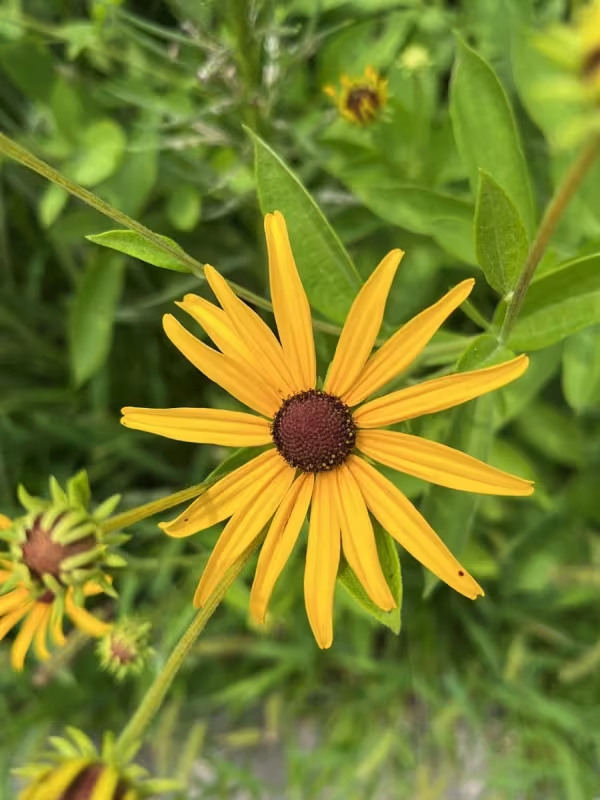
Description
Sowing dates
Sweet coneflower (Rudbeckia subtomentosa Pursh) is a perennial member of the Asteraceae family, historically native to the prairie regions of North America.
Propagation is typically performed via seeds, which benefit significantly from cold stratification to overcome natural dormancy before spring germination.
For outdoor sowing, seeds should be broadcast in late autumn, allowing the natural freeze-thaw cycles to prepare the embryo for emergence.
Indoor propagation is also possible, starting seeds in early spring, using a sterile starting mix and maintaining constant soil moisture at 20°C.
Transplanting seedlings into the garden should be delayed until the soil has warmed and the danger of frost has passed completely.
Growing requirements
This species thrives in full sun but can tolerate partial shade, provided it receives sufficient light to sustain its robust, tall stems.
While adaptable to various soil types, the sweet coneflower prefers deep, moisture-retentive, fertile soil, consistent with its natural prairie habitat.
Adequate water is essential during the plant's peak growing phase, particularly before and during the blooming period to ensure maximum flower count.
Soil pH should ideally be neutral or slightly acidic; it is crucial to avoid heavy clay or compacted soils that restrict root oxygenation.
Fertilization is rarely needed in rich garden soils, but a light application of organic compost in early spring can boost vitality and floral density.
Main diseases and pests
Powdery mildew is the most common foliar disease, especially in environments with poor air circulation or extended periods of high humidity.
Leaf spot pathogens can cause premature browning, which is best mitigated by removing debris and maintaining healthy spacing between plants.
Pests like aphids and beetles may occasionally feed on young foliage, requiring monitoring and occasional intervention with mild horticultural soaps.
Root rot remains a risk if the drainage is poor, making it essential to site the plants in a location that does not pool water after rain.
Integrated pest management, including weeding and keeping the planting site clean, provides the best defense against long-term disease buildup.
Harvesting
The primary use for Rudbeckia subtomentosa is in naturalistic landscape design, pollinator gardens, and as a long-lasting cut flower.
When harvesting for cut floral arrangements, stems should be cut when the flowers are about three-quarters open to maximize vase life.
Gardeners should deadhead spent blooms to encourage secondary flowering or cut the entire plant back to ground level after the first heavy frost.
Seed collection is straightforward; simply harvest the dry, dark cones after they have matured in late autumn and clean the seeds for future use.
As a hardy perennial, the plant is low-maintenance, requiring only minimal cleanup, which makes it a preferred choice for sustainable gardening projects.