
Wattle mat-rush
Lomandra filiformis (Thunb.) Britten
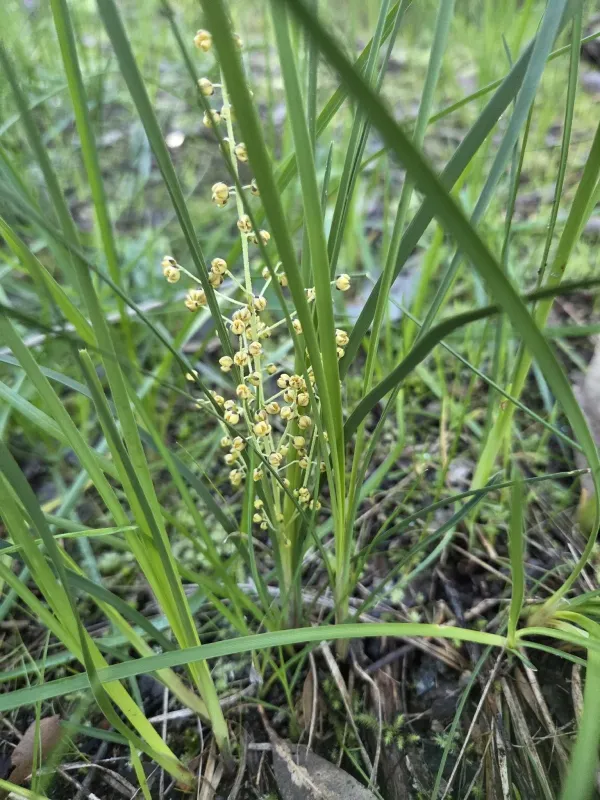
Description
Growing requirements
Wattle mat-rush (Lomandra filiformis) is a resilient perennial herbaceous plant belonging to the Asparagaceae family. It is native to Australia, where it naturally occurs across various habitats, including dry sclerophyll forests and open woodland areas.
Botanically, the plant is distinguished by its fine, thread-like foliage that grows in dense, upright clusters. The tough, fibrous leaves are an evolutionary adaptation that allows the plant to thrive in nutrient-poor soils and tolerate prolonged dry spells.
The cultural requirements are centered on excellent drainage and adequate solar exposure. While Lomandra filiformis is not overly demanding regarding soil fertility, it performs best in well-draining sandy or loamy soils with a near-neutral pH level.
Climate adaptation is a key feature of this species. It is highly drought-tolerant once established and can withstand varying temperatures, making it a reliable choice for gardens in temperate to subtropical climates where water conservation is prioritized.
In landscape architecture, the plant is utilized for its structural foliage and low-maintenance profile. It is commonly planted in mass groupings for erosion control, as a border element, or within contemporary garden designs to provide year-round textural interest.
Main diseases and pests
Lomandra species are generally robust and suffer from few pest or disease problems. The primary threat to the health of the plant is poor soil drainage, which often leads to root rot if the moisture levels remain too high for extended periods.
Fungal pathogens associated with overly wet conditions can compromise the root system. To prevent these issues, it is essential to ensure that the site allows for rapid water infiltration and that the crown of the plant is not buried too deeply.
Insect pests are rarely a significant concern due to the plant's tough, leathery leaf texture. Occasionally, sap-sucking insects might appear in very sheltered environments, but they rarely necessitate chemical intervention in well-ventilated, outdoor settings.