
Lomandra confertifolia subsp. rubiginosa
Lomandra confertifolia (F. M. Bailey) Fahn subsp. rubiginosa A. T. Lee
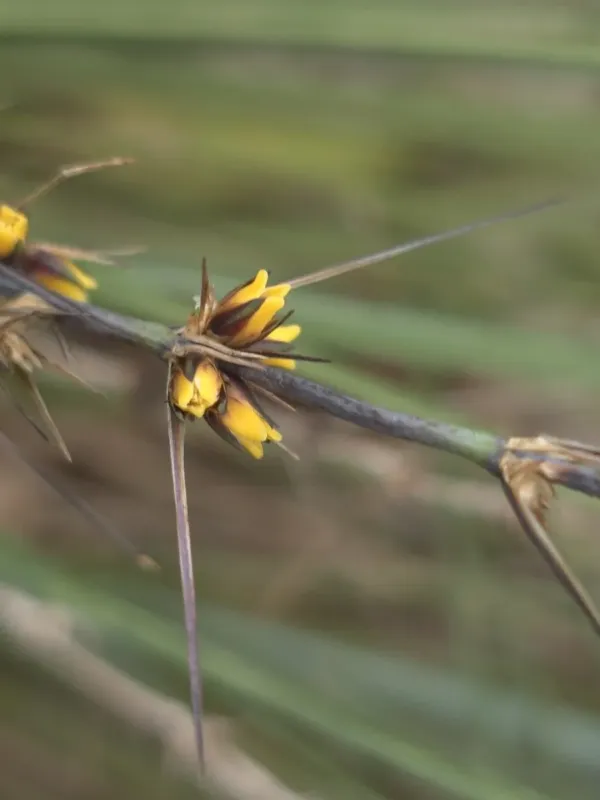
Description
Growing requirements
Lomandra confertifolia subsp. rubiginosa is a hardy perennial belonging to the Asparagaceae family. Native to the eastern regions of Australia, this plant has evolved to thrive in diverse environments, ranging from rocky outcrops to open forest understories.
The plant is characterized by its dense, clumping habit and stiff, narrow foliage with a distinct rusty-brown or glaucous hue. Its botanical structure is highly adapted to conserve moisture, making it an excellent candidate for water-wise gardening projects.
To cultivate this species successfully, gardeners must ensure the planting site has excellent drainage. It prefers sandy or rocky soil types that mimic its natural habitat. High soil moisture content is detrimental to the plant and can cause significant physiological stress.
This grass-like plant is highly valued for its aesthetic appeal in landscape design. It is frequently used for mass planting, erosion control on slopes, and as a low-maintenance filler in rock gardens, providing a stable, evergreen structure throughout the year.
Maintenance is straightforward, requiring only minimal pruning to remove dead or damaged leaves. The plant exhibits high resistance to common stressors such as drought and mild frost, requiring little to no supplemental fertilization once established in the correct location.
Main diseases and pests
The primary concern regarding this plant is root rot caused by poor soil drainage and waterlogging. While generally pest-resistant, plants kept in enclosed or humid environments may occasionally be prone to scale insects or spider mites if air circulation is insufficient.