
Three-flowered mistletoe
Viscum triflorum
Description
Growing requirements
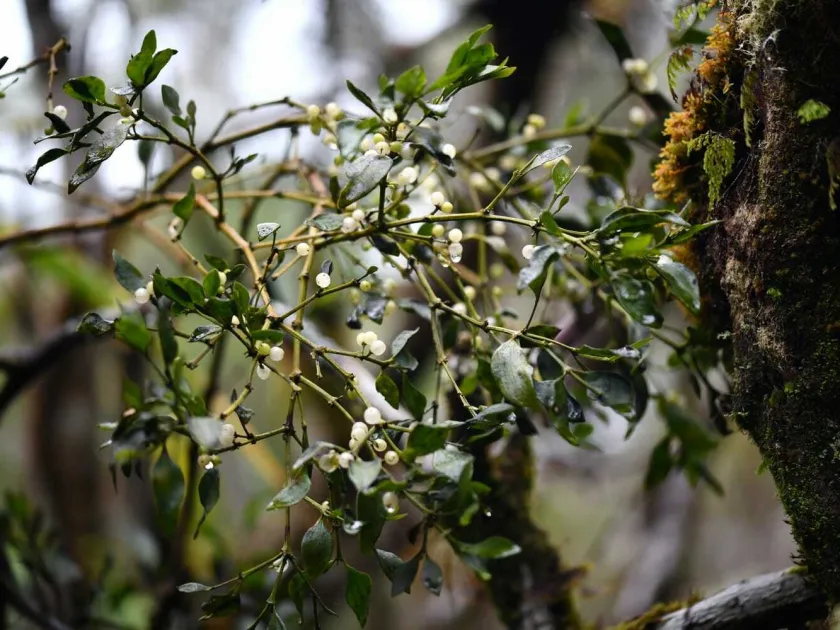
Three-flowered mistletoe (lat. Viscum triflorum) belongs to the Santalaceae family. This evergreen shrub is an obligate hemiparasite that develops on the branches of host trees.
The natural range of this species covers mainly tropical regions, including Caribbean countries and parts of South America. The plant is adapted to humid, warm conditions and is rarely found outside its usual ecosystems.
Biologically, the species is characterized by the presence of three-flowered inflorescences, which gave the plant its name. The leaves are leathery, opposite, and capable of photosynthesis, but the plant is entirely dependent on the host tree for water and mineral intake through specialized organs called haustoria.
For successful germination of mistletoe seeds, specific conditions are required: the presence of a suitable host tree with sufficient levels of light and bark moisture. The dispersal of seeds in nature is carried out primarily by birds, which carry sticky berries to new areas.
The plant is not a classic agricultural crop, but it is of scientific interest for studying the adaptations of parasitic species, their impact on tree physiology, and the chemical composition of secondary metabolites.
Main diseases and pests
In its natural habitat, three-flowered mistletoe is susceptible to specific fungal pathogens that cause leaf spot. It can also suffer from certain types of insect herbivores that feed on the succulent tissues of young shoots.