
Painted mistletoe
Viscum coloratum
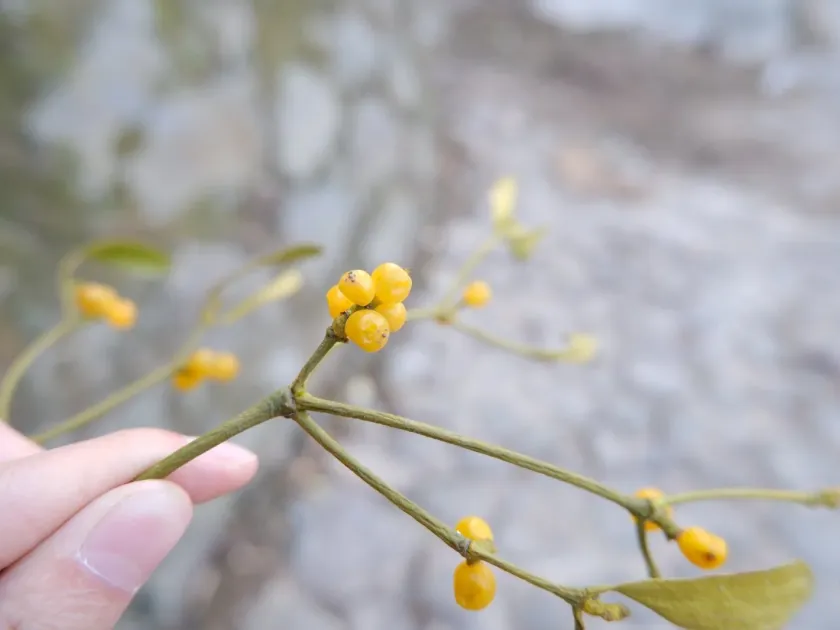
Description
Sowing dates
Painted mistletoe is not a conventional agricultural crop, but rather a hemiparasitic plant belonging to the Viscaceae family that grows on trees.
Its life cycle relies on birds that ingest the berries and deposit the seeds onto host tree branches, where the plant begins to germinate.
Artificial propagation of this species is technically complex because it requires a specific host-parasite physiological integration for survival.
There are no large-scale cultivation practices for this plant, as it is generally treated as a wild species existing within forest ecosystems.
Commercial supplies are derived from wild-harvested plants found in their native habitats across East Asia, including parts of the Russian Far East.
Growing requirements
The plant thrives in temperate climates with sufficient atmospheric humidity, typically found in regions of Northeast Asia and the Far East.
It shows strict host specificity, often selecting deciduous tree species like oaks, maples, and fruit-bearing trees that provide a steady flow of nutrients.
Soil quality is irrelevant for this plant since it obtains water and essential minerals directly from the host tree's xylem vessels.
Sufficient light exposure is crucial, as the plant needs to perform photosynthesis in its leaves to supplement the nutrients acquired from the host.
Painted mistletoe exhibits significant cold tolerance, allowing it to remain evergreen even during harsh winters in its northernmost habitats.
Yield
The yield of painted mistletoe is measured by the total weight of harvested foliage and stems obtained from naturally infected forest trees.
Productivity fluctuates based on the density of host trees and the age of the mistletoe colonies present within a specific forested area.
Due to the slow growth rate of the plant, sustainable harvesting requires multi-year cycles to allow the populations to regenerate effectively.
The primary economic use for the plant is in the pharmaceutical industry, where its active compounds are processed for antihypertensive medicines.
Standardized yields are achieved through strictly regulated collection protocols, ensuring that only high-quality biomass is sent for processing.
Main diseases and pests
Fungal pathogens can occasionally affect mistletoe colonies, especially in environments with poor air circulation or weakened host trees.
Various insects and herbivores may feed on the plant, although they rarely pose a threat to the overall population stability in the wild.
The most significant threat to the plant is forest management practices, where mistletoe is systematically removed to preserve the health of timber trees.
The plant maintains a high level of resilience against common agricultural pests, thanks to its unique ecological niche as an obligate hemiparasite.
Excessive colonization of a single host tree can eventually cause branch dieback, which influences how local forestry authorities manage the species.
Harvesting
Harvesting is performed manually, requiring specialized equipment to safely reach the branches where the mistletoe grows within the tree canopy.
The ideal harvesting season is late autumn or winter, as the chemical composition of the leaves is considered most potent during these months.
Collected materials must be dried rapidly in well-ventilated, shaded areas to preserve the integrity of the bioactive compounds for medical use.
Proper storage involves sealed containers in dark, dry environments to prevent the degradation of the plant's valuable pharmaceutical properties.
Sustainable collection practices are essential to ensure the long-term conservation of painted mistletoe populations in their native woodland environments.