
Crimson-flowered mistletoe
Viscum cruciatum
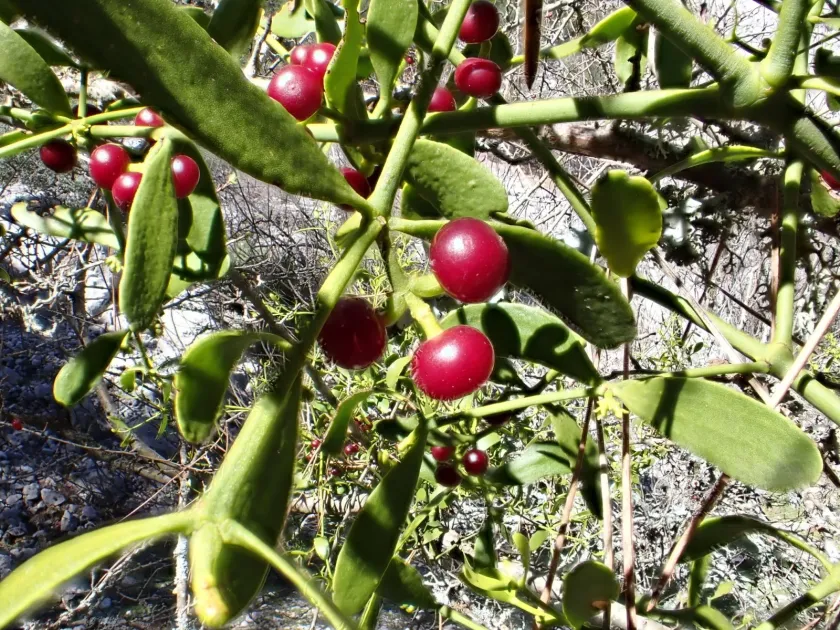
Description
Sowing dates
The crimson-flowered mistletoe is not a cultivated crop but a hemiparasitic plant that reproduces via avian vectors, specifically birds that consume the berries.
The seeds are coated with a sticky substance called viscin, which allows them to adhere firmly to the bark of host branches after passing through the bird's digestive tract.
Germination occurs when the seed produces a radicle that develops into a haustorium, a specialized structure capable of penetrating the host's xylem.
Unlike agricultural crops, this species does not require soil or traditional sowing methods; it relies entirely on the nutrients derived from the host tree.
The life cycle is strictly dependent on the establishment of a vascular connection with the host, ensuring a consistent supply of water and dissolved minerals.
Growing requirements
This species thrives in Mediterranean climates characterized by mild, wet winters and hot, dry summers, as it is highly sensitive to frost.
The selection of a host tree is essential, with preferences for specific species such as almond, hawthorn, and certain deciduous oaks.
It requires high solar radiation to perform photosynthesis effectively, which is why it typically colonizes the upper canopy of the host trees.
Optimal growth depends on the physiological vigor of the host plant, as the mistletoe draws its sustenance from the host's sap flow.
Environmental conditions must allow both the parasite and the host to maintain metabolic activity, particularly during the transition between winter and spring.
Main diseases and pests
The primary threat to the survival of this mistletoe is the removal or death of the host tree, which cuts off its only nutrient supply.
Fungal infections can affect the localized area where the haustoria are embedded, potentially compromising the attachment of the parasite to the branch.
Various specialized herbivorous insects feed on the leaves and berries, acting as a natural biological control that limits excessive spread.
Human management practices, including the pruning of infected branches in orchards, serve as the most effective method for controlling population density.
Severe infestation by mistletoe can lead to the decline of the host tree, creating a negative feedback loop that eventually eliminates the habitat for the parasite itself.