
Viscum articulatum
Viscum articulatum
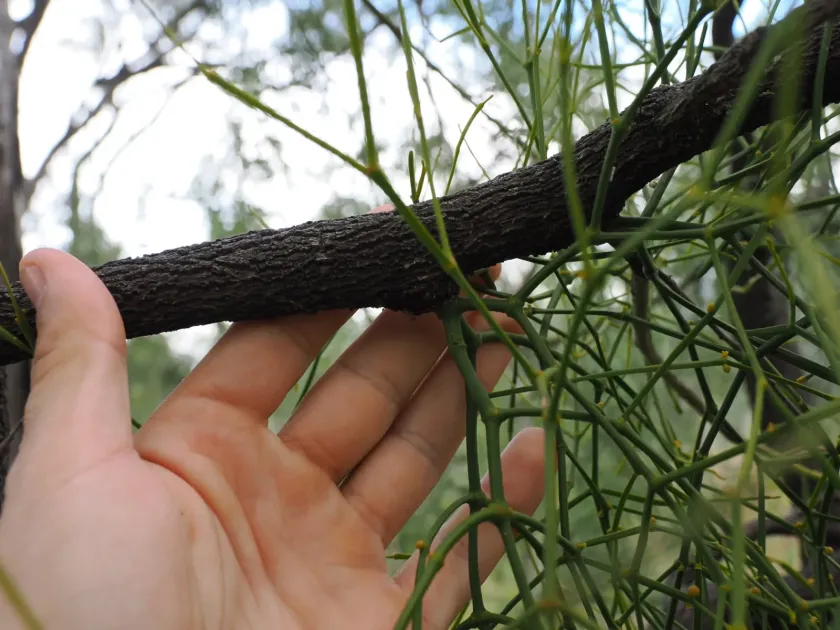
Description
Growing requirements
Viscum articulatum, commonly known as the jointed mistletoe, belongs to the Santalaceae family. It is a specialized hemiparasitic plant that thrives as an epiphyte on the branches of various host trees.
The species is native to tropical and subtropical regions across Asia and Northern Australia. It is highly adapted to environments where high humidity and warm temperatures persist year-round.
Botanically, it is defined by its distinctive segmented, flattened, green stem segments. These segments act as the primary photosynthetic organs, as the true leaves are highly reduced or absent.
It does not grow in soil; instead, it relies on haustoria to penetrate the host's bark and vascular system to extract water and essential nutrients, maintaining a parasitic relationship.
The plant demonstrates a strong preference for specific host species, showing complex evolutionary adaptations to the physiology and chemical defense mechanisms of its chosen host trees.
Main diseases and pests
Fungal infections are a significant threat to Viscum articulatum, particularly in humid climates where stagnant air encourages the rapid spread of pathogens across the segments.
Various insect larvae may feed on the succulent tissues of the mistletoe, causing physical damage that can lead to the necrosis of individual plant segments.
Competition for light and resources with other epiphytic plants on the same host can suppress the growth and reproductive output of the mistletoe population.
Host tree vitality directly dictates the health of the mistletoe; if a host tree weakens due to disease or environmental stress, the mistletoe faces the risk of starvation.
Human activities, such as forest clearing and the removal of host tree species, constitute the primary ecological threat to the ongoing survival of this parasitic plant.