
Oriental mistletoe
Viscum orientale
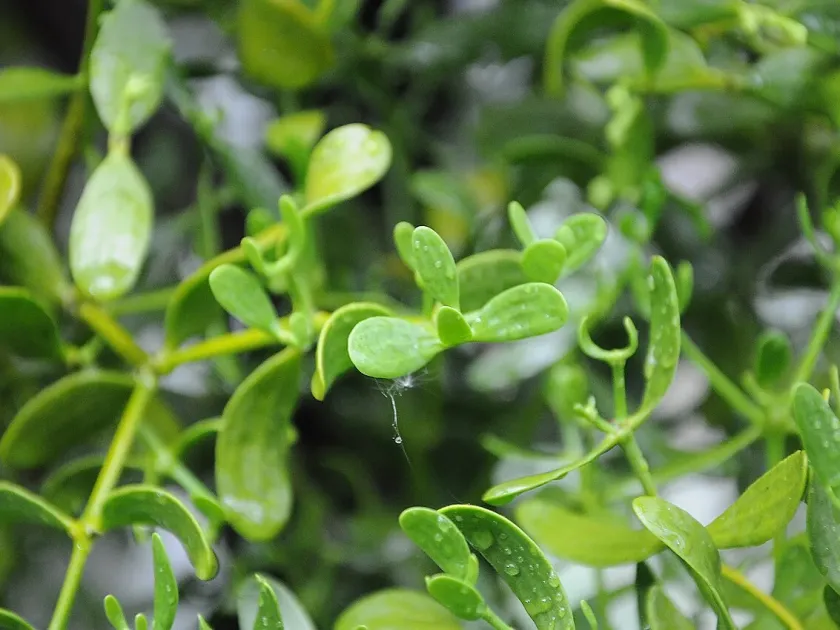
Description
Growing requirements
Oriental mistletoe (Viscum orientale) is a perennial evergreen shrub classified within the Santalaceae family. As an obligate hemiparasite, it derives essential moisture and nutrients from its host while retaining its ability to perform photosynthesis through its green, chlorophyll-containing leaves.
The native range of this species is primarily concentrated in tropical and subtropical Asian regions. It is an arboreal plant, meaning it completes its life cycle entirely in the canopy of host trees, without any contact with the ground or soil profile.
Botanically, the plant features specialized organs called haustoria. These structures penetrate the host's bark and reach the xylem, creating a permanent connection that facilitates the transfer of water and minerals directly from the tree to the mistletoe.
Climate requirements include high atmospheric humidity and relatively mild, stable temperatures throughout the growing season. These conditions are ideal for the germination of its sticky, viscin-coated seeds once they are deposited on a branch by birds.
From an agricultural standpoint, Oriental mistletoe is considered a significant biological challenge. Management requires constant vigilance in orchards and forestry, as the plant can rapidly spread and colonize entire groves if not monitored correctly.
Main diseases and pests
Oriental mistletoe acts as a major stressor for the host tree. By sequestering vital nutrients and water, it stunts the host's growth, reduces canopy density, and ultimately leads to localized dieback of infested branches or even tree mortality.
The primary vector for the dispersal of this species is avian. Birds consume the berries, and the seeds, which remain viable after digestion, are excreted onto other tree branches, ensuring the parasite's colonization of new territory.
Damaged trees suffer from structural degradation due to the haustorial system of the mistletoe. This decay makes the wood brittle and prone to breaking during severe weather, creating hazards for surrounding vegetation and infrastructure.
Control strategies are primarily mechanical. Removing infected branches is the most effective approach; however, it must be performed meticulously, ensuring the excision occurs well below the visible site of attachment to remove the deep-seated haustoria.
Biological and secondary threats include increased susceptibility to pests. Once the mistletoe weakens the host, the tree becomes highly vulnerable to secondary infestations by wood-boring insects and various fungal diseases that thrive on the compromised tissue.