
Bambara groundnut
Vigna subterranea (L.) Verdc.
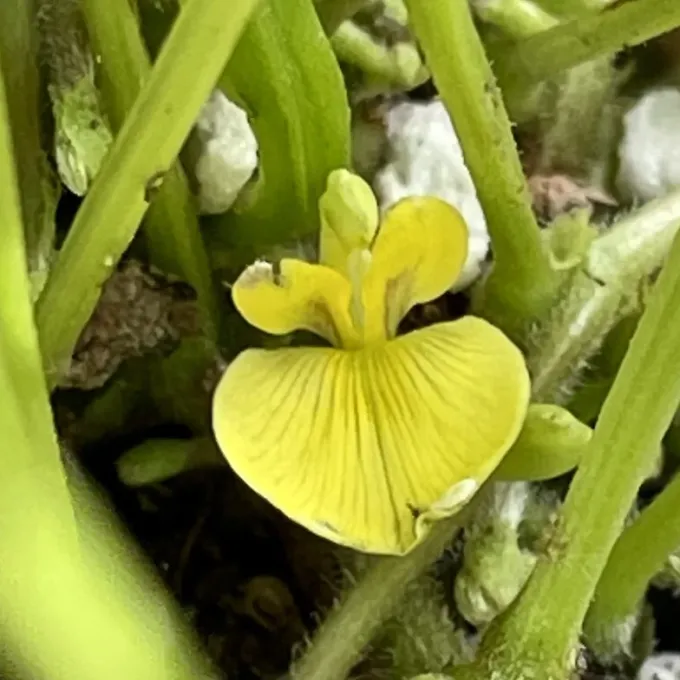
Description
Sowing dates
Bambara groundnut (Vigna subterranea) belongs to the Fabaceae family. It is an annual leguminous crop known for its ability to produce pods underground, making it a drought-tolerant crop in semi-arid regions.
Planting occurs once the soil temperature is consistently above 20°C. Cold soil can cause poor germination and seed rot, so it is essential to wait for stable warm weather before sowing.
Seeds are typically sown at a depth of 3 to 5 cm. Adequate soil moisture is required initially, but the crop is well-adapted to drier conditions compared to many other legumes once established.
Proper spacing is crucial to allow for sufficient aeration and to facilitate the practice of earthing up, which helps the peg (flower stalk) penetrate the soil to develop the pods.
This crop is a self-pollinating legume that relies on its unique botanical structure to bury its pods, ensuring protection from certain pests and maintaining environmental stability for seed development.
Growing requirements
The Bambara groundnut thrives in warm climates with temperatures ideally ranging between 25°C and 30°C. It is highly sensitive to frost and cool, waterlogged conditions.
Well-drained, loose, sandy soils are preferred for optimal growth. These soil types allow the pegs to penetrate the surface easily and promote better development of the underground pods.
While known for its drought resistance, irrigation during the flowering and pod-filling stages is highly beneficial for achieving high yields and uniform seed size.
The plant performs best under full sunlight, as it is sensitive to photoperiod changes, which can influence the timing of flowering and the duration of the reproductive phase.
Neutral soil pH is ideal for the nitrogen-fixing bacteria associated with the root nodules, which helps the crop thrive even in soils with relatively low fertility levels.
Yield
Yield performance of Vigna subterranea is heavily dependent on soil texture and climate conditions. Farmers typically harvest between 500 to 1,500 kg per hectare in traditional systems.
Improving agronomic practices, such as choosing high-yielding varieties and maintaining soil structure, can significantly boost production output in commercial cultivation.
Because the pods develop beneath the soil, monitoring yield progress is challenging. Careful observation of canopy senescence is the primary indicator of maturity.
The green biomass of the plant is also valuable, providing high-quality forage for livestock, which adds economic value to the farm beyond the grain harvest.
Consistency in agronomic management, specifically managing weed competition early in the season, is the most critical factor for ensuring high and stable yields.
Main diseases and pests
The crop is relatively hardy but can suffer from fungal diseases such as fusarium wilt and various root rots, particularly in poorly drained or overly damp soils.
Pests like aphids and thrips can cause damage to the foliage, which reduces the plant's overall vigor. Early detection and intervention are necessary to maintain plant health.
Storage pests, particularly the cowpea weevil, pose a major risk to seeds after harvest. Proper cleaning and storage in airtight or treated containers are essential to prevent infestation.
Weeds are the primary competitor for resources, especially during the first few weeks after emergence. Timely weeding is essential for minimizing yield loss.
- Fusarium wilt
- Root rot
- Cowpea weevil
- Aphids
Harvesting
Harvesting usually takes place when the leaves start to yellow and dry, indicating that the pods underground have reached physiological maturity.
The plants are typically lifted from the soil using mechanical harvesters or hand tools, ensuring that the underground pods are carefully extracted from the soil.
After lifting, the plants are usually allowed to dry in the field or in a sheltered area. This curing process helps to reduce moisture content within the pods.
Once dried, the pods are threshed to release the seeds. It is crucial to reach a safe moisture level of approximately 10-12% before storage to prevent fungal decay.
Storing the seeds in cool, dry conditions with adequate airflow protects the quality of the product and prevents the development of aflatoxins or other storage issues.