
Adzuki bean
Vigna angularis (Willd.) Ohwi & H. Ohashi
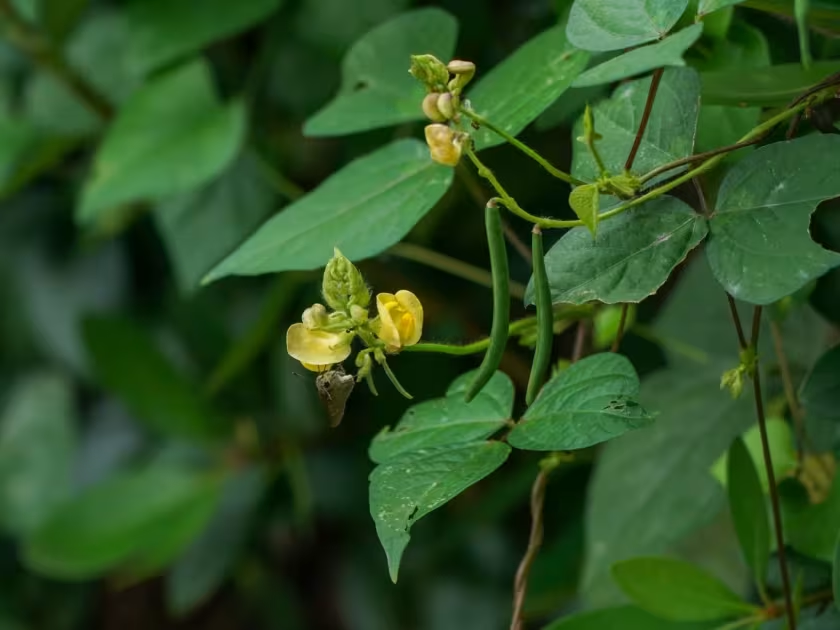
Description
Sowing dates
Sowing of adzuki beans (Vigna angularis) is carried out when the soil temperature at a depth of 10 cm reaches 15–18°C. In temperate climates, this usually coincides with the late spring sowing period to avoid the risk of late frosts.
The optimal planting pattern involves row spacing between 45 and 60 cm, providing sufficient space for bush development. The seed planting depth is between 3 and 5 cm, depending on soil type and moisture content.
Seeding rates vary depending on variety and vegetative mass, typically ranging from 40 to 60 kg of seeds per hectare. Ensuring optimal plant density is crucial for good airflow through the canopy.
Adzuki is a heat-loving crop, so early sowing in cold soil can lead to seed rotting and sparse emergence. To accelerate germination, some farmers pre-soak seeds in growth stimulants.
In regions with short summers, the use of early-maturing varieties is recommended to ensure the growing season fits within the warm period. Adhering to sowing dates is critical to prevent lodging and ensure proper seed maturity.
Growing requirements
Vigna angularis belongs to the Fabaceae family and is an annual herbaceous plant with a bush or semi-bush growth habit. This thermophilic crop prefers well-lit areas with long daylight hours.
The plant thrives in loamy and sandy loam soils with a neutral or slightly acidic pH. Good drainage is essential, as waterlogging is detrimental to the root system and promotes rot.
This crop possesses high drought tolerance compared to many other legumes, though it requires regular watering during the flowering and pod formation stages to produce a high-quality yield.
The optimal temperature range for active growth is 25–30°C. Below 15°C, plant development slows down significantly, making the crop sensitive to cooler climates.
Agronomic requirements include regular inter-row cultivation to control weeds and ensure soil aeration. Adzuki is also responsive to phosphorus and potassium fertilizers applied during the early vegetative stages.
Yield
The average yield of adzuki beans under standard agronomic conditions ranges from 1.5 to 2.5 tons per hectare. This indicator depends heavily on soil fertility and moisture levels during critical growth stages.
Potential productivity is influenced by the number of productive nodes and pods per plant. High-yielding varieties can reach up to 3–4 tons per hectare with intensive irrigation and fertilization.
Maintaining crop density is an important factor, as sparse stands are prone to weed infestation, which reduces the total harvest mass. Timely harvesting is also essential to prevent yield loss from pod shattering.
Using high-quality, pathogen-free seed stock ensures stable yield gains. Adapting specific varieties to local regional conditions allows for the realization of the crop's full biological potential.
When grown as a green manure crop, biomass production can be significant, which positively contributes to the fertility of subsequent crops in the rotation cycle.
Main diseases and pests
Adzuki beans are susceptible to several fungal diseases, most notably anthracnose and powdery mildew, which flourish in high humidity and dense plant stands. Prevention includes crop rotation and the use of resistant varieties.
Bacterial leaf spots can cause premature foliage desiccation and reduced photosynthetic efficiency. Controlling the spread of these infections is achieved through seed disinfection prior to planting.
Among pests, aphids and spider mites cause the most damage by sucking sap from young leaves and shoots. They are controlled using selective insecticides or biological pest management methods.
Root rots caused by soil-borne pathogens are often a result of overwatering or low temperatures at the beginning of the growing season. Management includes proper irrigation and timely soil cultivation.
To minimize losses from pests and diseases, agronomists recommend regular field monitoring starting from the early stages of development. An integrated approach to plant protection significantly reduces the risk of crop failure.
Harvesting
Harvesting of adzuki beans begins when the seeds reach full maturity, indicated by the pods turning a characteristic color and gaining a sheen. At this stage, seed moisture should drop to 15–18%.
Signs of readiness include foliage senescence and the darkening of pod valves. It is important to avoid over-maturing in the field, as pods can shatter, leading to significant grain losses during combine harvesting.
Harvesting technology typically involves a single-pass method using a combine with appropriate headers. In cases of uneven ripening, pre-harvest desiccation may be used to synchronize moisture levels.
Immediately after threshing, the grain is cleaned and dried to a standard moisture level of approximately 12–13%. Proper post-harvest handling is necessary for long-term storage and to prevent fungal spoilage.
Adzuki seeds should be stored in dry, well-ventilated facilities at a stable temperature. Due to their high nutritional value and taste, a well-managed crop is a highly marketable commodity.