
Sea bean
Vigna marina (Burm.) Merr.
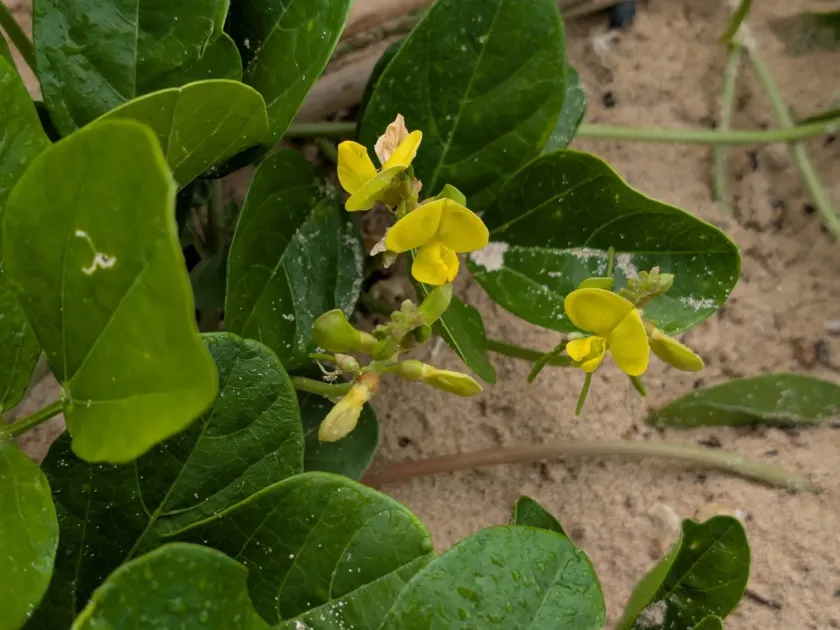
Description
Growing requirements
Sea bean (Vigna marina) is a perennial herbaceous plant belonging to the Fabaceae family. It is a specialized halophyte recognized for its remarkable ability to thrive in saline environments, such as sandy beaches and coastal dunes, where salt concentrations would be lethal to most other crops.
Native to tropical and subtropical coastal regions across the Indian and Pacific Oceans, this plant has adapted to withstand harsh conditions, including high salinity, strong coastal winds, and direct salt spray. Its creeping growth habit helps it anchor shifting sands effectively.
Climate requirements for this culture are strictly tropical, necessitating year-round warmth and high solar radiation. The plant is extremely sensitive to cold and cannot survive in frost-prone climates, making its cultivation restricted to specific geographical zones.
Soil management for Sea bean requires excellent drainage. While the plant is naturally adapted to nutrient-poor sandy soils, supplemental organic matter and phosphorus can enhance growth rates in agricultural applications aimed at revegetation or fodder production.
The primary economic and environmental value of Vigna marina lies in its utility as a soil stabilizer and a nitrogen fixer. By forming symbiotic relationships with soil bacteria, it replenishes depleted sandy soils with organic nitrogen, facilitating the recovery of degraded coastal ecosystems.
Main diseases and pests
Cultivated Sea bean can be susceptible to fungal diseases such as powdery mildew, particularly when humidity levels remain high for extended periods in dense plantings.
Root rot is a significant risk factor, primarily caused by waterlogging in soils that do not provide adequate drainage or during excessively rainy seasons.
Pest issues often involve infestations of aphids, which target tender new foliage, and certain species of weevils that can damage reproductive buds and seeds.
Integrated pest management, including regular crop monitoring and the use of natural predators, is recommended to keep pest populations below economic damage thresholds.
Maintaining proper spacing between plants is crucial to ensure airflow and reduce the humidity levels that favor the development of various fungal pathogens.