
Vigna luteola
Vigna luteola (Jacq.) Benth.
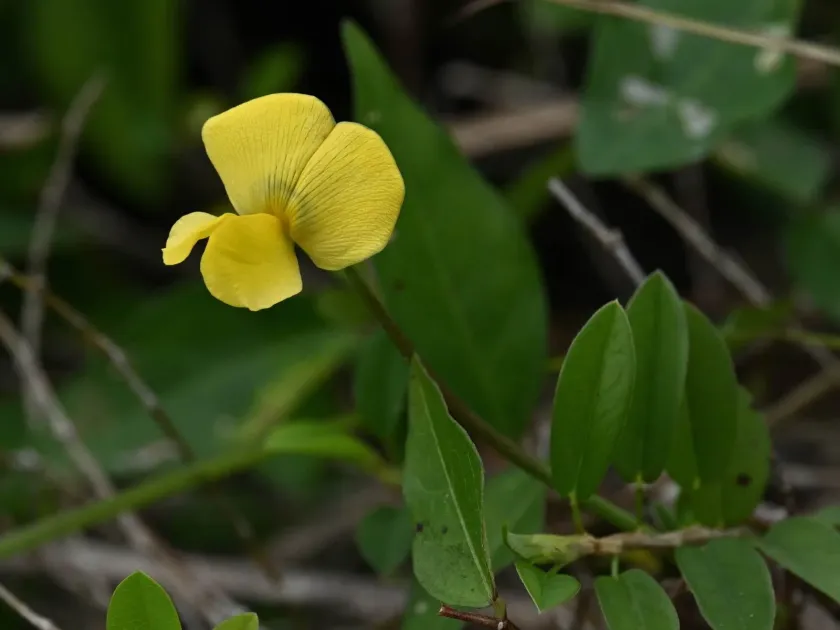
Description
Sowing dates
Sowing of Vigna luteola is performed when the soil has sufficiently warmed, as the crop is thermophilic and sensitive to frost. The optimal time is late spring when soil temperatures reach 18–20 degrees Celsius.
The sowing rate depends on the cultivation goals, whether it is for green biomass or seed production. Seeds are sown at a depth of 3–5 cm, ensuring good soil contact and adequate moisture for germination.
In tropical regions, planting can occur throughout the wet season. For cultivation in more temperate zones, it is crucial to consider the vegetation period to ensure sufficient biomass accumulation before autumn.
To speed up germination, pre-sowing seed treatment is recommended, including scarification if the seed coat is hard. Row planting with spacing of 45–60 cm is most effective for proper aeration and sunlight exposure.
Inoculating seeds with nitrogen-fixing bacteria before sowing significantly increases germination rates and boosts early root development, which is vital for the plant's long-term health.
Growing requirements
Vigna luteola is a member of the Fabaceae family and is a twining, herbaceous plant often grown as an annual. The crop is highly demanding of heat and does not tolerate sudden temperature changes well.
The plant thrives best on fertile, well-drained loamy soils but exhibits high plasticity. It can tolerate temporary waterlogging, making it suitable for lower areas where other legumes might suffer from root rot.
The crop is light-loving and requires good lighting for intense photosynthesis and fruit production. Shading causes the stems to stretch excessively, reducing overall biomass production and yields.
Adequate moisture levels are an important requirement. Despite some tolerance to dry spells, the plant needs regular rainfall or irrigation to reach maximum biomass capacity.
The optimal soil pH range for this species is 5.5–7.0. On overly acidic or alkaline soils, the efficiency of nutrient uptake, especially phosphorus and potassium, drops significantly.
Yield
The yield of Vigna luteola as a forage crop can reach high levels with proper management. The green mass is highly nutritious and palatable to livestock, making it a valuable feed component.
Used as a cover crop or green manure, it can accumulate up to 150–200 kg of nitrogen per hectare through symbiosis with root nodule bacteria, significantly improving soil fertility.
In seed-producing fields under favorable conditions, the yield can vary from 1.5 to 2.5 tons per hectare. The number of seeds per pod depends on variety characteristics and agricultural practices.
Dry matter output is typically about 25% of the total fresh weight. Thanks to its rapid growth rate, the plant is highly effective at suppressing weed development in the field.
Regular fertilization with phosphorus and potassium is recommended to maximize flowering and the formation of high-quality fruits throughout the harvest season.
Main diseases and pests
The primary threats to Vigna luteola are fungal diseases that thrive in high humidity conditions. Anthracnose and various leaf spots can significantly reduce the photosynthetic capacity of the plant.
Root rot is a major risk during periods of excessive soil moisture. It damages the root system, hindering nutrient transport and leading to wilting and eventual plant death.
Among pests, aphids, spider mites, and various weevils cause the most damage. These insects attack both the foliage and the reproductive organs, leading to substantial yield losses.
Soil-borne nematodes can negatively affect root system development by causing gall formation, effectively blocking the transport of water and nutrients throughout the plant.
- Maintain crop rotation to prevent soil pathogen buildup.
- Use disease-resistant varieties in agricultural planning.
- Employ biological control methods to manage insect pests.
Harvesting
Harvesting for green mass is carried out at the flowering stage when the plant contains the highest levels of protein and nutrients. Delaying the harvest leads to stem lignification and lower feed quality.
When grown for seeds, it is important to wait until the pods are fully mature. The pods should change color to dark brown or black, indicating that the seeds are ready for collection.
Harvesting is performed mechanically using grain harvesters adjusted for legumes to minimize seed loss during the threshing process.
After collection, seeds must be dried to a moisture content of 12–14% to prevent spoilage and fungal growth during long-term storage in warehouses.
The remaining straw can be used as supplementary livestock feed or as organic fertilizer, which can be incorporated into the soil to improve its physical structure and nutrient content.