
Moth bean
Vigna aconitifolia (Jacq.) Maréchal
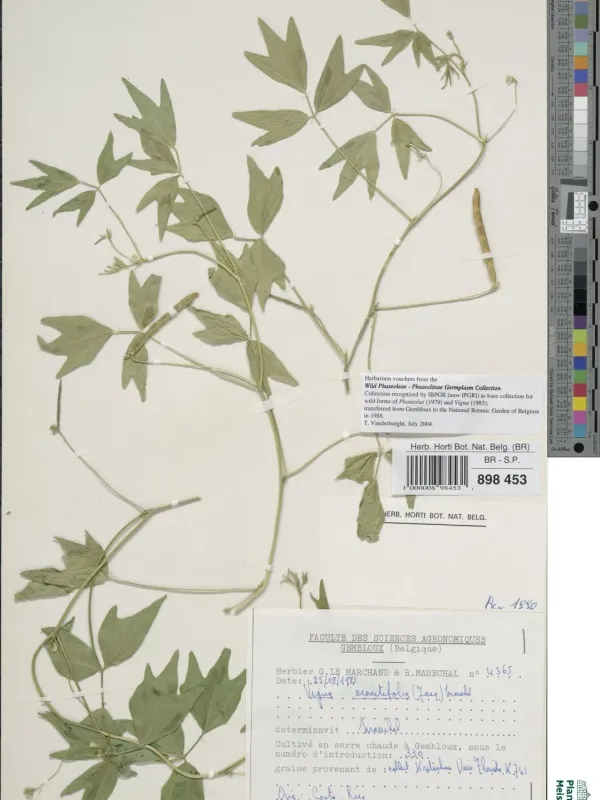
Description
Sowing dates
Moth bean (Vigna aconitifolia) is a highly drought-tolerant legume crop native to arid regions of South Asia. Its rapid growth cycle makes it an excellent choice for areas with unpredictable rainfall patterns.
Sowing typically occurs when soil temperatures rise consistently above 20°C. In its primary cultivation zones, this coincides with the onset of the monsoon season, which provides the necessary moisture for germination.
Seeds should be sown in rows spaced 30 to 45 cm apart to ensure adequate airflow and sunlight penetration. A planting depth of 3–5 cm is ideal for robust emergence and protection from soil surface heat.
The plant demonstrates vigorous early-stage growth if kept free from weed competition. Proper seedbed preparation is essential to eliminate weed pressure that could impede the initial development of the crop.
Seed density is adjusted based on soil quality; in poorer soils, higher seeding rates are recommended to compensate for potential lower germination or seedling survival rates.
Growing requirements
Vigna aconitifolia thrives in hot and dry climates, exhibiting exceptional tolerance to extreme temperatures that would inhibit the growth of most other legume species.
The crop prefers well-drained, sandy, or light loam soils. It is particularly sensitive to waterlogging, which often results in root rot and significantly decreased plant health.
High solar radiation is required for optimal photosynthesis and pod development. The plant is photoperiod-sensitive, meaning its flowering is influenced by the length of the daylight hours.
Soil nutrient management focuses on low-to-moderate nitrogen levels. As a legume, it fixes nitrogen through symbiosis with Rhizobium bacteria, reducing the need for external chemical nitrogen inputs.
Proper water management is critical; although it is drought-resistant, occasional supplemental irrigation during the peak flowering stage can substantially increase the final yield.
Yield
The yield of moth bean typically ranges from 600 to 1,000 kg per hectare. Variations in yield are largely due to soil fertility, rainfall distribution, and the efficiency of pest control measures.
Beyond seed production, the plant serves as a vital forage crop. The foliage is rich in protein and is often harvested as hay to provide livestock with high-quality feed during dry seasons.
The seeds are a staple food source, renowned for their digestibility and nutritional value. They contain essential amino acids, making them a cornerstone of traditional healthy diets.
As a green manure crop, Vigna aconitifolia is incorporated into the soil to improve organic matter content and soil structure, which benefits subsequent agricultural cycles.
Optimizing planting time and utilizing balanced fertilization regimes are the most effective ways for farmers to maximize both seed output and green biomass production.
Main diseases and pests
Fungal diseases like leaf spot and anthracnose are the most common threats to moth bean, especially in environments where humidity levels fluctuate during the growth season.
Insects like aphids and the bean beetle (bruchids) represent major pest challenges. Aphids damage the plant directly and transmit viral diseases, while beetles destroy stored grains.
Viral infections, including bean yellow mosaic virus, can cause stunted growth and yield loss. Management relies on controlling insect vectors and ensuring field sanitation.
Integrated Pest Management (IPM) practices are encouraged to maintain ecological balance and prevent the development of resistant pest populations.
- Regular inspection for aphid infestations
- Use of certified, disease-free seed stocks
- Crop rotation with non-leguminous species
- Timely removal of crop debris to reduce pathogen habitats
- Biological control measures to protect beneficial insects
Harvesting
Harvesting is performed when pods reach full maturity and display a characteristic brown or black color. Timing is crucial to prevent the pods from drying out and shattering in the field.
Manual harvesting is common in small-scale farming, where farmers selectively pick mature pods. This multi-pass approach ensures that the highest quality beans are collected at their peak.
For large-scale operations, mechanical harvesting is utilized. This requires carefully calibrated machinery to ensure that the delicate beans are not crushed or damaged during the threshing process.
Post-harvest processing involves drying the beans to a moisture content of less than 12% to facilitate long-term storage and prevent mold growth in bins or warehouses.
Storage facilities must be dry, cool, and well-ventilated. Proper storage prevents infestation by stored-product pests, ensuring that the final produce remains safe for food or seed use.