
Veronica media
Veronica x media Schrad.
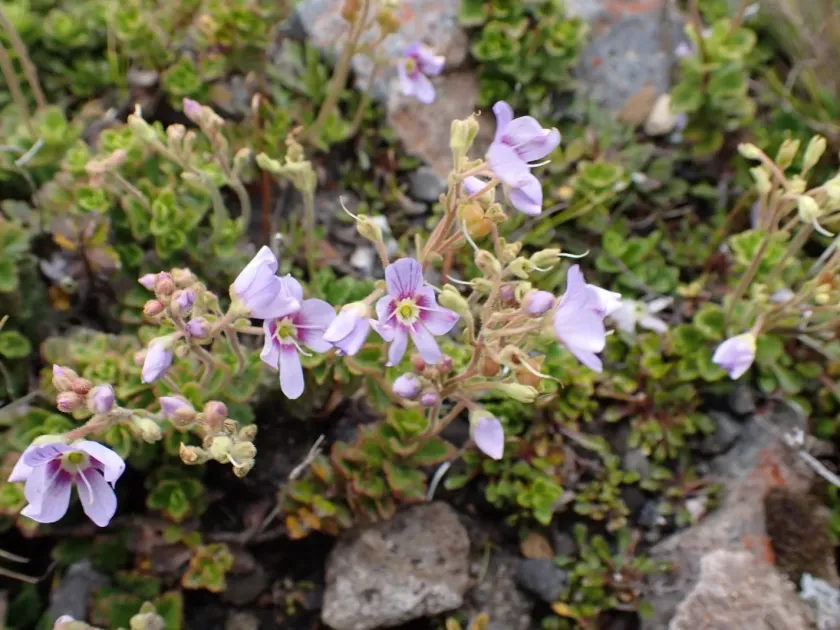
Description
Sowing dates
Sowing seeds of Veronica media is typically performed in late autumn, directly into the open ground, which allows for natural cold stratification of the seeds.
For spring sowing, seeds require a mandatory pre-treatment period, involving stratification in refrigerated conditions for 45 days to ensure high germination rates.
The optimal planting depth is very shallow, approximately 0.5 to 1 cm, as the seeds need light exposure to trigger successful germination.
Seedlings usually emerge within two to three weeks, requiring consistent moisture and protection from surface crusting to establish correctly.
Large-scale production often utilizes vegetative propagation through root division in early spring, ensuring uniform growth and faster harvest cycles.
Growing requirements
Veronica media is a perennial herbaceous plant belonging to the Plantaginaceae family, recognized for its significant ecological adaptability.
The plant thrives in well-lit environments but maintains moderate tolerance for partial shade, allowing for versatile field selection.
It prefers light, moderately moist, and well-drained loamy soils with a neutral pH, which support vigorous development of its root system.
Proper drainage is critical, as stagnant water frequently leads to root suffocation and increased susceptibility to various pathogenic fungi.
The plant is highly winter-hardy and requires no special protection during harsh climate conditions, reflecting its resilient natural origins.
Yield
The overall yield of green biomass for Veronica media is directly influenced by soil fertility, planting density, and irrigation management.
Under optimal agronomic conditions, biomass accumulation is consistent, allowing for high-quality harvesting during the peak flowering stage.
The crop is highly valued for its medicinal properties and as a botanical source for pollinators, making it an excellent dual-purpose agricultural plant.
Maximum productivity is typically achieved by the second or third growing season, once the plants reach their full structural development.
Strategic application of balanced mineral fertilizers at the start of the vegetative season can significantly boost output and biomass quality.
Main diseases and pests
Powdery mildew is the primary disease affecting the foliage, particularly under conditions of high humidity and poor air circulation between rows.
Leaf spot pathogens represent a common threat, often requiring integrated preventive fungicidal applications to maintain crop health.
Pest management focuses on controlling aphids and various caterpillars that can cause significant damage to the plant's succulent stems and buds.
Root rot becomes a major threat in fields with heavy soils or poor irrigation control, leading to rapid plant decline and field gaps.
Effective management includes maintaining crop rotation schedules and controlling weeds that act as alternative hosts for common pests and diseases.
Harvesting
Harvesting is conducted during the mass flowering stage, when the secondary metabolites in the aerial parts are at their peak concentration.
The upper parts of the flowering stems are collected using specialized harvesting equipment designed for delicate botanical materials.
Immediate post-harvest processing is essential to prevent fermentation, ensuring the product is moved quickly to controlled drying facilities.
Drying should occur at temperatures not exceeding 40 degrees Celsius in well-ventilated areas to preserve the chemical integrity and aesthetic color.
Secondary growth allows for additional harvesting if environmental conditions and soil nutrient profiles are maintained throughout the season.