
Prostrate speedwell
Veronica prostrata L.
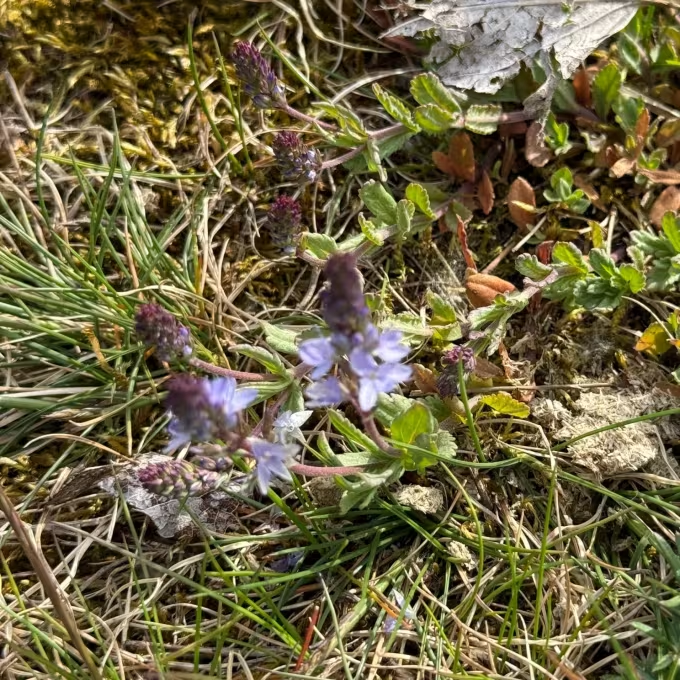
Description
Sowing dates
Veronica prostrata L., known as prostrate speedwell, is a member of the Plantaginaceae family. It is a perennial herbaceous plant valued for its low-growing, spreading habit.
Seeds are sown in late autumn or early spring. They require light to germinate, so they should be surface-sown on a well-prepared seedbed without being buried deep.
When starting indoors, seeds should be kept in a temperature range of +18°C to +20°C with consistent moisture, typically emerging within two to three weeks.
Seedlings are transplanted to their permanent location once the danger of frost has passed, maintaining a spacing of approximately 25 cm.
Vegetative propagation via division in early spring or autumn is a common practice that helps maintain the vigor of established ground-cover patches.
Growing requirements
Prostrate speedwell thrives in full sun, which promotes dense growth and abundant flowering, although it can tolerate light partial shade.
It prefers well-drained, moderately fertile soil and is notably adaptable to sandy or rocky soils, making it ideal for rock gardens and borders.
The plant is highly drought-tolerant once established and does not require frequent irrigation, provided that the soil does not remain perpetually waterlogged.
Soil pH should ideally be neutral or slightly alkaline, as the plant struggles in overly acidic or excessively heavy, compacted clay soils.
Minimal maintenance is required: simple weeding and occasional trimming after the flowering period to encourage new growth and tidier appearance.
Main diseases and pests
While generally robust, Veronica prostrata can face challenges in environments with high humidity and poor air circulation, which favor fungal development.
Powdery mildew is a recurring concern, manifesting as a white, dusty layer on the foliage, which can be managed by improving airflow and sunlight exposure.
Insect pests, including aphids and occasional leaf-eating caterpillars, may infest the plant during the active growing season if the plant is stressed.
Proper plant hygiene is essential: remove dead plant debris at the end of the season to minimize overwintering sites for fungal spores and pests.
In cases of severe infestation, integrated pest management practices, including the use of horticultural oils or soaps, are recommended to maintain plant health.